QUICK ANSWER
Three things cause darts to bounce out.
Your board’s wire system, your dart points, or your throwing angle. Wire hits are the most common cause. Blunt or over-sharpened points are second. Throwing angle is third but the easiest to fix.
This guide helps you figure out which cause applies and gives you the specific fix for each one.
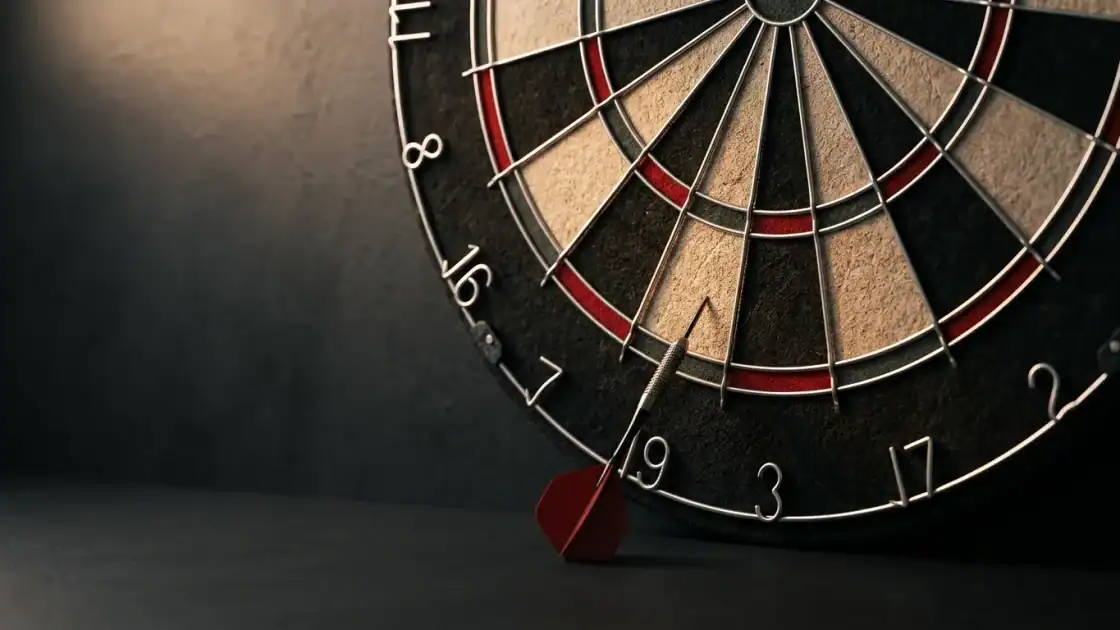
Every darts player deals with bounce-outs. The dart hits the board and ricochets back to the floor. It scores nothing, breaks your rhythm, and can damage your points or your floor. Some bounce-outs are unavoidable – even PDC professionals hit wires on televised legs. But if your darts are bouncing out regularly, something specific is wrong and it falls into one of three categories.
This guide covers why darts bouncing out happens, how to tell which cause you are dealing with, and the specific fix for each. According to TheDartScout’s analysis of equipment data and player forums, roughly 60% of regular bounce-outs trace back to the board itself, 30% to dart points, and 10% to throwing technique.
What Is the Difference Between a Bounce-Out and a Drop-Out?
These are two different problems with different causes. A bounce-out is when the dart hits the board and immediately ricochets off – it never penetrates the sisal. A drop-out is when the dart sticks in the board for a moment, then falls out under its own weight. The causes overlap but the primary fix is different.
Bounce-outs are usually caused by the dart hitting wire or staples on the board surface. Drop-outs are usually caused by blunt points that do not grip the sisal fibres, or by a worn board where the sisal has lost its density. This article covers both, but the fixes are listed separately so you can target the right one.

Why Do My Darts Keep Bouncing Out?
Cause 1: The board’s wire system (most common)
Every dartboard has a wire system that divides the scoring segments. When your dart point hits that wire instead of the sisal, it bounces off. The thicker the wire, the more surface area it exposes, and the more often this happens.
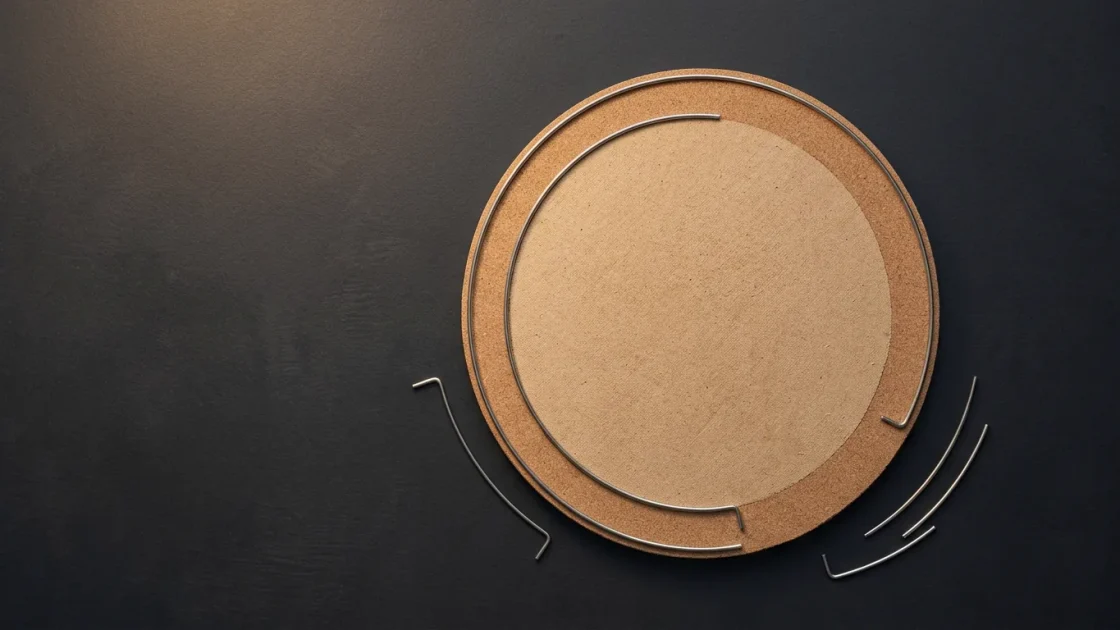
Older boards use round wire pinned to the surface with staples. These have the thickest profile and the most bounce-outs. The staple heads sit above the surface and act as additional deflection points. Budget boards under £15 (~$20) almost always use this construction.
Mid-range boards use triangular or diamond wire designed to deflect the dart downward into the sisal rather than bouncing it away. This works when the dart hits at a steep angle but is less effective at shallow angles.
Premium boards – the Winmau Blade series, Unicorn Eclipse, and similar competition-grade boards – use blade wire embedded directly into the sisal with no staples. The wire profile is roughly 50% thinner than round wire, and the blade angle is designed to guide the dart into the board rather than deflecting it. The PDC-official Winmau Blade X uses a carbon fibre compound to hold the blades in place.
How to tell this is your problem: look at where your bounce-outs happen. If most of them occur at segment boundaries (where the wires are), the wire system is the cause. If bounce-outs happen across the whole board surface including the middle of segments, the problem is elsewhere.
The fix: if your board uses round wire with staples, the most effective fix is upgrading to a blade-wire board. A Winmau Blade 6 or Unicorn Eclipse HD2 costs £30-40 (~$40-50) and will cut your bounce-out rate dramatically. If you already have a blade board, make sure it is not worn out – after heavy use, the sisal compresses around the wires and exposes more metal. Rotating your board regularly (turn the number ring so the 20 segment moves to a less-used position) extends its life. For help choosing, see our dartboard guide.
Cause 2: Dart point condition
The shape of your dart point determines how it interacts with both the wire and the sisal. Points that are too blunt or too sharp both cause problems.
Too blunt: a blunt point cannot push past the wire and into the sisal. It hits the wire and has nowhere to go but backward. Blunt points are the number one reason for darts bouncing out among casual players who never maintain their equipment. Points go blunt over time as they hit the wire and the hard backing behind the sisal.
Too sharp: a needle-sharp point digs into the wire on contact instead of sliding past it. The point makes an impression in the metal, stops dead, and the dart bounces back. A slightly rounded point slides along the wire and finds its way into the sisal beside it. This is why most pro players keep their points lightly rounded rather than razor-sharp.
Too smooth: even a correctly shaped point will not grip if the surface is polished smooth. Sisal fibres need micro-texture on the point to hold the dart in place. A smooth point lets the dart slide back out under gravity – this is a drop-out rather than a bounce-out.
How to tell this is your problem: run your fingertip across the point. If it feels glassy smooth with no texture, the point needs scuffing. If the tip is visibly flat or rounded off, it needs sharpening. If it pricks your finger like a needle, it is too sharp.
The fix: use a dart sharpener or 150-grit sandpaper. Hold the dart at a slight angle and rotate it while drawing the point across the sandpaper. You want a gently rounded tip with a slightly rough texture – not a needle point and not a flat end. Ten seconds of work per dart is usually enough. Repeat every few weeks depending on how often you play. If your points are severely damaged or bent, replace them – moveable point systems like the Winmau Trident or Target Storm points cost £3-5 (~$4-6) per set and reduce bounce-outs because the point retracts slightly on wire contact.

Cause 3: Throwing angle and force
Less common than the first two causes but worth checking if you have a good board and sharp points but still get regular bounce-outs.
Shallow angle: a dart that arrives nearly parallel to the board surface has a much higher chance of deflecting off the wire. The ideal entry angle is between 15 and 45 degrees from the board face. Darts that arrive at very steep angles (lobbed throws) or very shallow angles (flat, bullet-like throws) are more likely to bounce. According to TheDartScout’s review of board manufacturer testing data, darts entering at 20-35 degrees have the lowest bounce-out rate because the point contacts the sisal at an angle that slides past the wire rather than hitting it head-on.
Weak throw: a dart with low momentum does not have enough force to push past the wire or penetrate the sisal deeply. It hits, slows, and falls. This is common with very light darts (under 20g) thrown gently.
The fix: if your darts arrive at shallow angles, your release point may be too late in the arc. See our consistent dart throw guide for release mechanics. If the issue is force, try heavier darts – moving from 20g to 24g gives the dart significantly more momentum without requiring you to throw harder. Our dart weight guide covers the tradeoffs.
Distance matters too: make sure your oche is at the correct distance. Standing too close means the dart arrives at a steeper angle, and too far means it arrives flat and slow. The regulation distance is 7 feet 9.25 inches (2.37m) for steel tip. Our dartboard setup guide covers the exact measurements and mounting height.
How to Diagnose Your Bounce-Out Problem
Run this quick test before spending money on new equipment.
Step 1: throw 30 darts at the board normally. Count how many bounce out or fall out. Note WHERE on the board each bounce-out happens – on a wire, in the middle of a segment, or on a staple.
Step 2: if most bounce-outs happen on wires or staples, the board is the primary cause. If they happen across the surface, check your points.
Step 3: sharpen your points with sandpaper (10 seconds per dart). Throw another 30 darts. If the bounce-out count drops, your points were the issue. If it stays the same, the board is the bottleneck.
KEY TAKEAWAY
Sharpen your points first. It is free and takes 30 seconds. If that does not fix it, the board is the problem and the only real fix is upgrading to a blade-wire board.
Quick Fix Reference
| Symptom | Cause | Fix |
|---|---|---|
| Bounce-outs mostly on wire lines | Thick wire / staple board | Upgrade to blade-wire board (£30-40 / ~$40-50) |
| Bounce-outs across whole surface | Blunt or over-sharp points | Sharpen to rounded tip with 150-grit sandpaper |
| Darts stick then fall out | Smooth points or worn sisal | Scuff points for texture; rotate or replace board |
| Bounce-outs with light darts only | Not enough momentum | Try 22-24g darts |
| Bounce-outs on shallow throws | Entry angle too flat | Adjust release point; check throw mechanics |
| Bounce-outs get worse over time | Board wear around wires | Rotate board regularly; replace when compressed |
SCOUT’S TAKE
Most bounce-out guides tell you to sharpen your points and call it done. That helps, but it is treating the symptom. If you are throwing at a £10 (~$13) pub board with round wire and staples, no amount of point maintenance will fix the problem. A blade-wire board is the single best upgrade you can make for reducing bounce-outs. It costs less than a decent set of darts.
How Do You Maintain a Board to Prevent Bounce-Outs?
Even a premium blade-wire board degrades over time. The sisal compresses where you throw most often (typically around the 20, 19, and treble segments), exposing the wire edges and creating dead spots. A few habits extend your board’s life and keep bounce-outs low.
Rotate regularly. Turn the number ring so the 20 segment moves to an unused position. Do this every few weeks if you play daily, or monthly for casual play. This spreads wear across the entire board instead of concentrating it in the scoring zones.
Remove darts correctly. Twist darts gently as you pull them out rather than yanking them straight. Pulling straight tears the sisal fibres and creates holes that do not close properly. Twisting lets the fibres part and resettle.
Keep it dry. Never clean a bristle board with water or liquid cleaners. Water causes the sisal to swell and then harden as it dries, creating stiff patches that deflect darts. If the surface gets dusty, wipe it with a dry cloth. For more on board care and the right setup, see our surround and lighting guide.
Know when to replace. If the sisal around the treble 20 is visibly compressed and smooth, if you can see wire edges poking above the surface, or if your darts consistently bounce from areas that used to grip fine, the board needs replacing. A quality bristle board lasts 1-3 years depending on usage.
Frequently Asked Questions
How often should I sharpen my dart points?
Every two to four weeks if you play several times a week. Run your fingertip over the point before each session – if it feels glassy smooth or visibly flat, sharpen it. Use 150-grit sandpaper or a dedicated dart sharpener. Ten seconds per dart with a rotating motion gives you the right texture without over-sharpening.
Do heavier darts bounce out less?
Yes. Heavier darts carry more momentum at the same throwing speed, which means they push through wire contacts and penetrate sisal deeper. If you currently throw 18-20g darts and experience frequent bounce-outs, try 22-24g. Most professionals throw in the 21-25g range. See our weight guide and tungsten percentage guide for how weight affects barrel size.
What are moveable point darts?
Moveable point systems have a spring-loaded tip that retracts slightly into the barrel on impact. When the point hits a wire, the spring absorbs the impact and the dart continues forward into the sisal beside the wire instead of bouncing back. Brands like Winmau (Trident 180) and Target (Storm) offer moveable point sets. They cost a few pounds more per set but reduce bounce-outs noticeably on boards with thicker wire systems.
Do darts bouncing out count as a throw in competition?
Yes. Under PDC and WDF rules, a bounce-out counts as a thrown dart and scores zero. You do not get to re-throw it. This is why reducing bounce-outs matters in competitive play – a bounce-out on a checkout attempt can cost you the leg. For full rules, see dart rules explained.
For board selection, read how to choose a dartboard. If your darts wobble instead of bouncing, see why darts wobble in flight. For throwing mechanics, check consistent dart throw. To pick the right weight, read how to choose dart weight. rather than bounce, see why darts wobble in flight. For throwing mechanics, read consistent dart throw. To choose the right weight for your throw, check how to choose dart weight. For solo drills to improve accuracy, see how to practice darts alone. For point shapes and maintenance, see dart point types. New to darts? Start with our beginner’s guide or take the dart recommendation quiz.