QUICK ANSWER
A complete home darts setup costs £50 to £250+.
At the budget end, £50 (~$65) gets you a bristle board, a decent set of darts, and something to protect the wall. At the premium end, £250+ (~$320+) adds dedicated lighting, a quality oche mat, and a dartboard cabinet. This guide breaks the home darts setup into three clear spending tiers so you know exactly what to buy – and what to skip.
Setting up darts at home sounds simple: hang a board, throw some darts. But the range of equipment is wider than most beginners expect. The difference between a frustrating setup and one you actually enjoy comes down to three things: your room, your budget, and which accessories genuinely matter.
This home darts setup guide walks through every component, organises them into three budget tiers, and tells you what to skip entirely. If you have £50 (~$65) or £250+ (~$320+) to spend, you will know exactly where your money goes.
How Much Does a Home Darts Setup Cost?
The total cost depends on how many accessories you add around the board and darts. Here is a realistic breakdown across three tiers, based on 2026 UK retail prices with US equivalents.
| Item | Budget | Mid-Range | Premium |
|---|---|---|---|
| Bristle dartboard | £25–35 (~$30–45) | £40–55 (~$50–70) | £55–70 (~$70–90) |
| Dart set (3 darts) | £15–25 (~$20–30) | £25–40 (~$30–50) | £40–80 (~$50–100) |
| Dartboard surround | £8–15 (~$10–20) | £15–25 (~$20–30) | £25–40 (~$30–50) |
| Oche marker | £0 (tape) | £10–20 (~$13–25) | £20–40 (~$25–50) |
| Lighting | £0 (room light) | £15–30 (~$20–40) | £30–60 (~$40–75) |
| Cabinet | – | – | £40–80 (~$50–100) |
| Total | £48–75 (~$60–95) | £105–170 (~$135–215) | £210–370 (~$265–470) |
According to TheDartScout’s analysis, the sweet spot for most players is the mid-range tier. You get meaningful upgrades over budget: better board longevity, proper tungsten darts, and dedicated lighting. You skip the cosmetic extras like a cabinet that adds nothing to your game.
What Space Do You Need for Darts at Home?
Before you buy anything, measure your room. A home darts setup that is too cramped to throw in properly is a waste of money. Here are the minimum dimensions.
| Dimension | Minimum | Why |
|---|---|---|
| Room depth | 3.5 m (11.5 ft) | 2.37 m throw line + 0.6 m board face to wall + at least 0.5 m behind the oche for stance |
| Width either side of board | 0.6 m (2 ft) | Prevents elbow contact with walls during throw |
| Ceiling height | 2.1 m (7 ft) | Avoids high-arc throws clipping the ceiling |
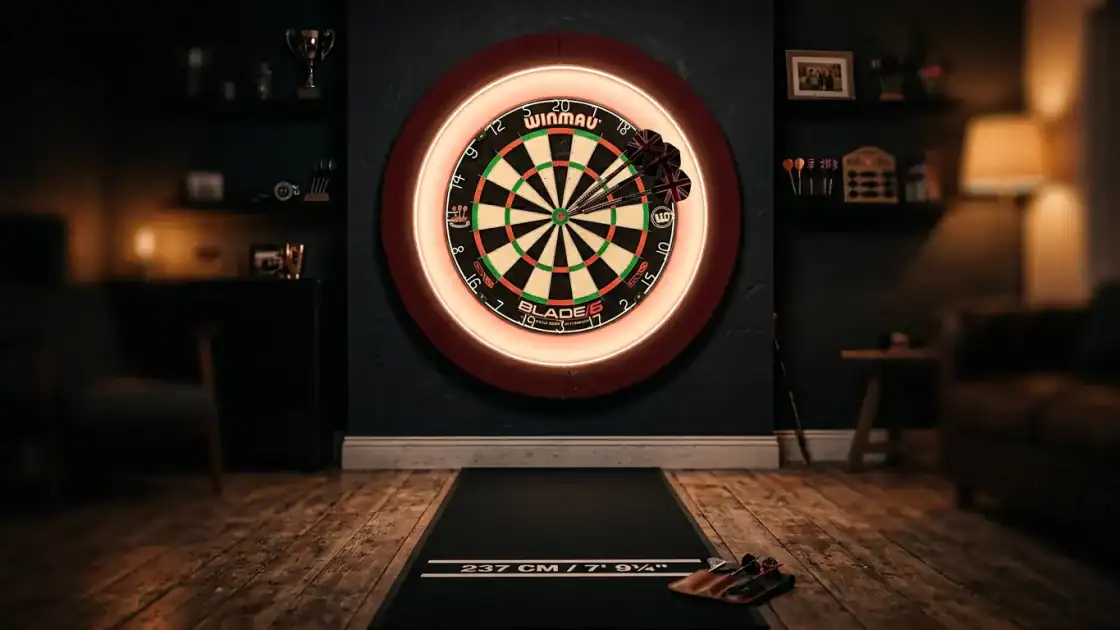
If your room is slightly short on depth, you can mount the board on the back of a door or in an alcove. Never shorten the throwing distance. The official oche-to-board distance is 2.37 m (7 ft 9.25 in), as set by the World Darts Federation. Changing it will make every practice session transfer poorly to real games. For exact mounting instructions, see our guide on how to set up a dartboard.
Wall Types and Mounting
| Wall type | Mounting method | Notes |
|---|---|---|
| Brick / concrete | Wall plugs + screws | Most secure. Standard bracket holds any board. |
| Plasterboard / drywall | Heavy-duty wall anchors or screw into stud | Find a stud with a detector. Toggle bolts work if no stud is available. |
| Rented property (no drilling) | Freestanding dartboard stand | Costs £30–60 (~$40–75). Only option if your landlord forbids wall holes. |
What Equipment Do You Need for a Home Darts Setup?
There are six equipment categories in a home darts setup. Two are essential, two are strongly recommended, and two are optional. Here is what each does and when it is worth the money.
Dartboard (Essential)
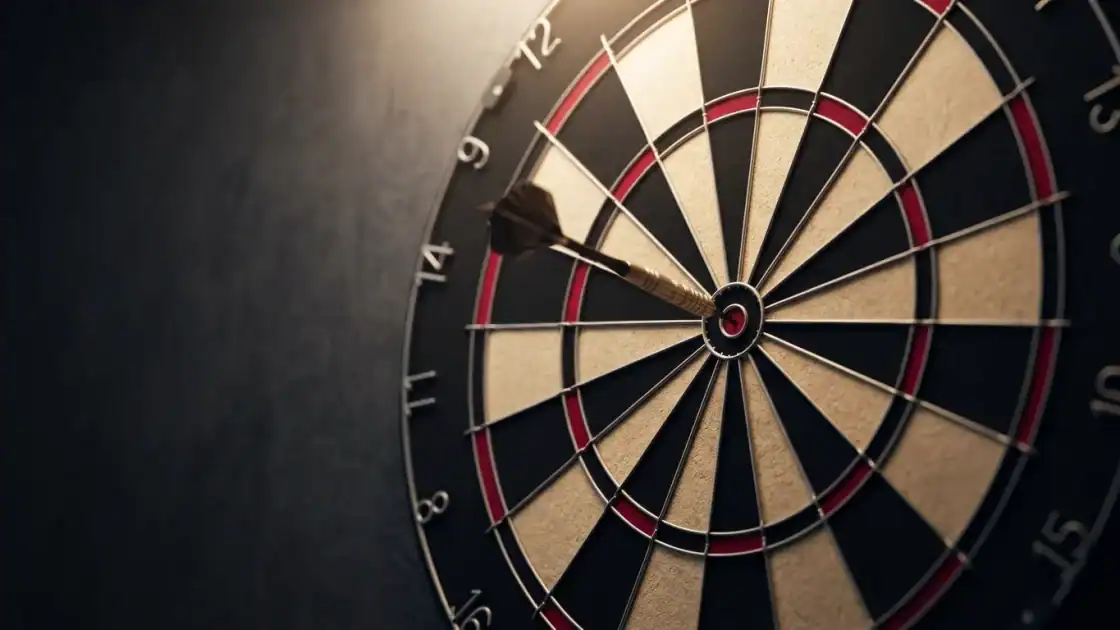
A bristle (sisal) board is the only type worth buying for steel-tip play. Sisal fibres self-heal when darts are removed, so the board lasts years of regular use. The PDC and all major leagues use bristle boards exclusively. Budget boards use lower-density sisal and have thicker wire dividers, which cause more bounce-outs. Mid-range and premium boards use thinner wire and higher-density sisal. For ranked picks, see our best dartboards for home, giving tighter groupings and longer life.
Avoid electronic boards unless you specifically want soft-tip play. They are louder (the plastic segments click on impact), less durable, and not used in any major league. For a full comparison, see steel tip vs soft tip darts. For help choosing the right bristle board, read how to choose a dartboard.
Darts (Essential)
A set of three tungsten darts is the standard. Tungsten is denser than brass, which means slimmer barrels and tighter groupings on the board. Budget tungsten darts (80% tungsten) work perfectly for beginners. Higher percentages (90%, 95%) are slimmer but cost significantly more. For the full breakdown, see tungsten vs brass darts and 80% vs 90% vs 95% tungsten.
Weight matters more than tungsten percentage for most players. If you are unsure where to start, 22–24 g is the most common range. Our dart weight guide explains how to pick the right weight for your throw style. To see exactly what is included at each price tier, read what comes in a dart set.
Dartboard Surround (Strongly Recommended)
A surround is a foam ring that sits around the board and catches stray darts. It protects your wall from holes and reduces the noise of bounce-outs hitting hard surfaces. At £8–15 (~$10–20) for a basic one, it is the cheapest accessory that makes the biggest difference to keeping your wall intact.
Oche Marker (Strongly Recommended)
You need a consistent throwing line. A strip of tape on the floor costs nothing and works fine for practice. A raised oche mat (£10–20 / ~$13–25) gives tactile feedback so you know your toe position without looking down, and it protects the floor from dropped darts. Premium rubber mats (£20–40 / ~$25–50) also dampen the sound of darts that bounce out and hit the ground.
Lighting (Optional but Valuable)
A dedicated dartboard light eliminates shadows on the board face. For a full breakdown of lighting types and DIY options, see our dartboard surround and lighting guide. Shadows make it harder to see the thin treble and double beds clearly, especially at 2.37 m distance. A ring light that mounts around the board costs £15–30 (~$20–40). It makes a noticeable difference to your aiming accuracy, particularly in rooms with overhead lighting that casts downward shadows.
At the budget tier, your room’s existing light is fine. But if you find yourself squinting at the board, a light is the single most impactful mid-range upgrade.
Cabinet (Optional – Cosmetic Only)
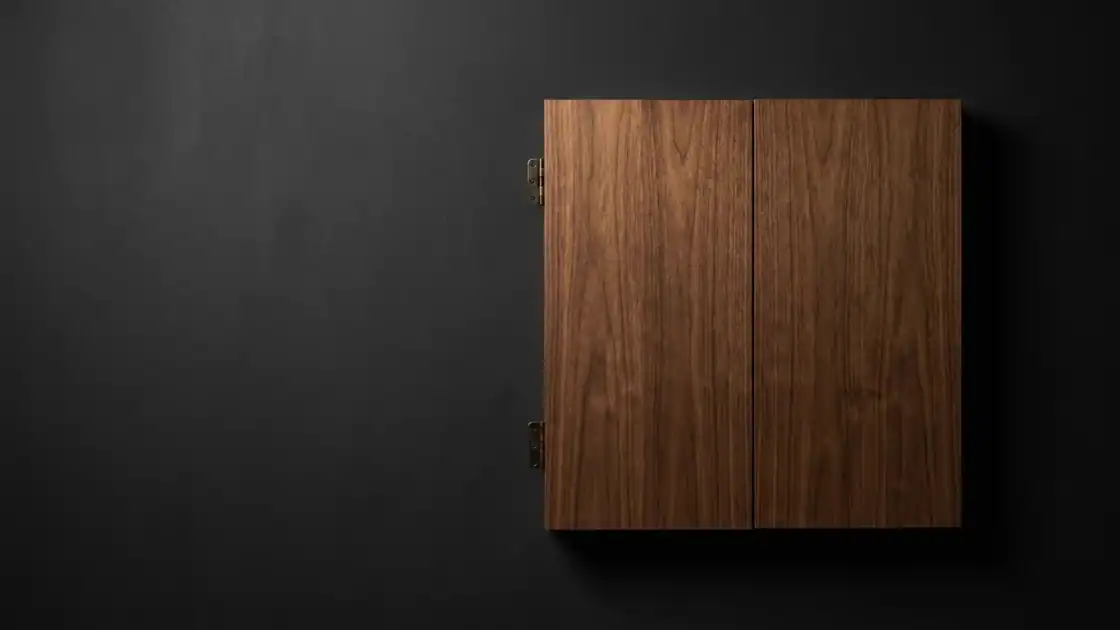
A dartboard cabinet houses the board behind wooden doors. Open the doors to play, close them to hide the board. It looks tidy in a living room. But it adds £40–80 (~$50–100) and does absolutely nothing for your game. The doors can also restrict arm movement during your throw if the cabinet is mounted in a tight space. Only buy one if aesthetics matter more than budget.
Budget Tier: Under £50 (~$65)
This is the minimum viable home darts setup. You get everything you need to play real darts with correct distances and decent equipment. Nothing here will hold you back as a beginner.
BUDGET TIER – WHAT YOU GET
Board: Entry-level bristle board (£25–35 / ~$30–45). Staple-wire dividers, standard sisal density. Lasts 6–12 months of daily play before the treble 20 bed wears out.
Darts: 80% tungsten set (£15–25 / ~$20–30). Standard flights and nylon shafts included.
Surround: Basic foam ring (£8–15 / ~$10–20). Catches most stray darts.
Oche: Strip of tape on the floor. Free.
Lighting: Your room’s existing light. Free.
Total: £48–75 (~$60–95).
At this tier, your board will wear faster than a mid-range one, and the thicker wires will cause more bounce-outs. But the throwing experience is real – same distances, same scoring, same doubles to finish on. Many players practise at this level for years without upgrading.
Mid-Range Tier: Around £120 (~$150)
This is the tier TheDartScout recommends for most home players. Every upgrade here directly improves your practice quality.
MID-RANGE TIER – WHAT YOU GET
Board: Mid-range bristle board with blade-wire dividers (£40–55 / ~$50–70). Thinner wires reduce bounce-outs. Higher-density sisal lasts 12–24 months of daily play.
Darts: 90% tungsten set (£25–40 / ~$30–50). Slimmer barrels allow tighter groupings. Better grip options.
Surround: Branded surround with snug fit (£15–25 / ~$20–30).
Oche: Raised oche mat (£10–20 / ~$13–25). Tactile edge you can feel with your toe.
Lighting: LED ring light (£15–30 / ~$20–40). Eliminates shadows on the board face.
Total: £105–170 (~$135–215).
The blade-wire board is the single biggest upgrade. Fewer bounce-outs means fewer interruptions to your rhythm and fewer dents in the wall behind the surround. The lighting is the second biggest – you will notice the difference immediately if you have been playing under a single overhead bulb.
Premium Tier: £250+ (~$320+)
This tier is for players who practise daily and want their setup to look and feel professional. The functional upgrades over mid-range are smaller – most of the extra cost goes to durability, aesthetics, and comfort.
PREMIUM TIER – WHAT YOU GET
Board: Top-tier bristle board (£55–70 / ~$70–90). Maximum sisal density, competition-grade wire system. Used in professional events.
Darts: 90–95% tungsten set (£40–80 / ~$50–100). Player-spec barrels, precision machined grip patterns.
Surround: Premium surround (£25–40 / ~$30–50). Denser foam, full coverage.
Oche: Heavy rubber oche mat (£20–40 / ~$25–50). Stays in place, absorbs dropped darts, floor protection.
Lighting: Professional ring light (£30–60 / ~$40–75). Even illumination, no hot spots.
Cabinet: Wooden cabinet (£40–80 / ~$50–100). Hides the board, stores darts. Cosmetic only.
Total: £210–370 (~$265–470).
If budget is no concern, skip the cabinet and put that £40–80 toward better darts instead. A premium dart set matched to your grip style will improve your game. A cabinet will not. To understand which barrel shape suits your grip, read our dart barrel shapes guide.
What Should You Skip as a Beginner?
Not every darts accessory is worth buying. Some are marketed heavily but add little to your game, especially when starting out.
| Item | Why skip it | When it makes sense |
|---|---|---|
| Electronic scorer | Phone apps or a chalk scoreboard do the same job for free | If you play competitively and want instant stats tracking |
| Dartboard cabinet | Cosmetic only – adds nothing to play quality | If the board is in a shared living space and aesthetics matter |
| Premium flights and shafts | Your dart set comes with them. Replace when worn, not before. | After 3–6 months when originals are damaged |
| Dartboard stand | Wall mounting is more stable and cheaper | Rented property where drilling is not allowed |
| Second dart set | Learn one set first. Switching between sets slows muscle memory. | After 6+ months when you know your preferences |
According to TheDartScout’s testing, the most common beginner mistake is spending too much on darts and too little on the board. A £60 dart set thrown at a £20 board is backwards. The board affects every single throw. The darts only affect grouping – and at beginner accuracy levels, 80% tungsten performs identically to 95%.
How Do You Reduce Noise from a Home Dartboard?
Noise is a real concern if you share walls with neighbours or play late at night. Bristle boards are quiet on impact – sisal absorbs the dart naturally. The noise comes from three other sources.
| Noise source | Solution | Cost |
|---|---|---|
| Darts bouncing out and hitting the floor | Rubber oche mat catches dropped darts | £10–40 (~$13–50) |
| Darts hitting the wall around the board | Dartboard surround absorbs stray throws | £8–40 (~$10–50) |
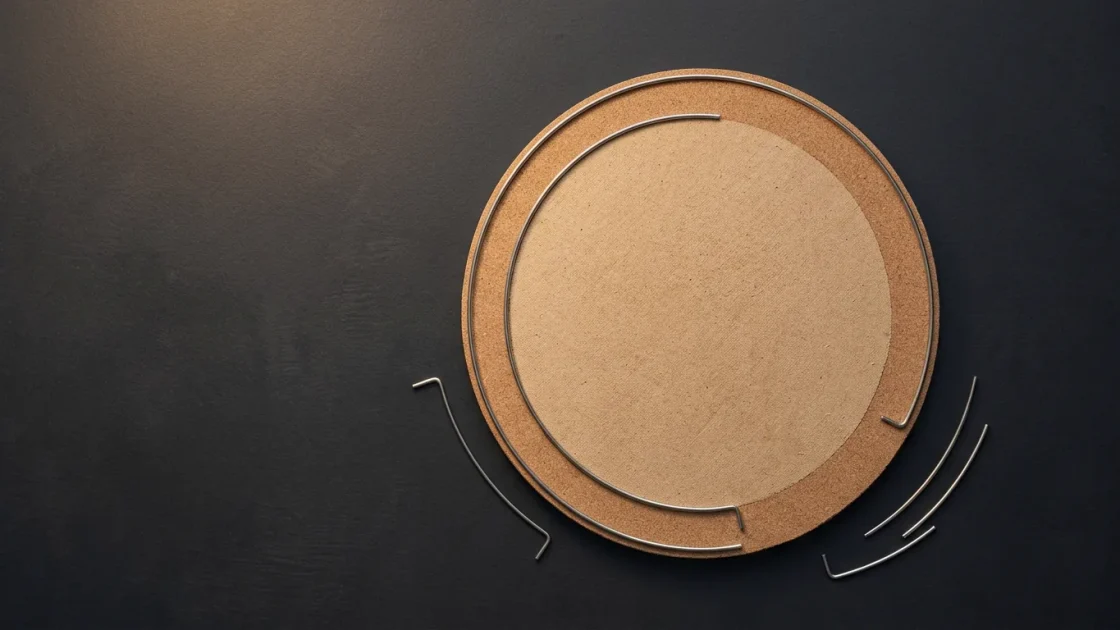
| Board vibration transferring through the wall | Mount with a foam backing pad between board bracket and wall | £2–5 (~$3–7) |
A surround plus an oche mat eliminates most of the noise. The foam backing pad is a cheap extra that stops the thud from transferring into the wall structure – especially useful on plasterboard walls in flats. Together, these three fixes mean darts is one of the quietest home sports you can play.
SCOUT’S TAKE
If noise is your main concern, do not buy an electronic dartboard thinking it will be quieter. Soft-tip darts hitting plastic segments are louder than steel tips hitting sisal. The click-clack of an electronic board carries further through walls than the soft thud of a bristle board. A bristle board with a surround and mat is the quietest home darts setup you can build.
Frequently Asked Questions
Can you set up darts in a small room?
Yes, but you need at least 3.5 m (11.5 ft) of depth. That gives you the official 2.37 m throwing distance plus space for the board and your stance. Width is less critical – 0.6 m either side of the board centre is enough. Garages, spare bedrooms, and long hallways all work well.
Do you need a dartboard surround?
Strictly, no. But unless you hit the board with every dart, a surround saves your wall from holes and reduces noise. At £8–15 (~$10–20), it pays for itself in avoided wall repairs after a few weeks of play.
Is it worth buying a dartboard cabinet?
Only for aesthetics. A cabinet does not improve play, protect the board, or reduce noise. If the dartboard is in a shared living space and you want to hide it when not in use, a cabinet makes sense. Otherwise, spend that money on a better board or lighting instead.
What is the best surface to put under a dartboard?
A rubber oche mat is ideal. It protects the floor from dart points, absorbs the sound of dropped darts, and gives you a consistent throwing line. On carpet, the throwing line stays in place naturally. On hard floors, look for a mat with a non-slip backing.
That covers everything you need for a complete home darts setup. For mounting instructions, see how to set up a dartboard. For wall protection and lighting, read surround and lighting. To pick the right board, check how to choose a dartboard. Take the dart recommendation quiz for gear recommendations. at any budget. For mounting instructions and exact measurements, read how to set up a dartboard. To choose the right board, see how to choose a dartboard. For the electronic vs bristle board comparison, see electronic vs bristle dartboard. If you are picking your first set of darts, start with our beginner’s guide to darts or take the dart recommendation quiz.