QUICK ANSWER
Clean first. If the grip is still gone, add wax or tape. If the grooves are flat, replace the barrel. And if your points are blunt or bent, see our guide on how to repoint darts – same maintenance session, different tool.
Most grip loss is just dirt filling the grooves. A five-minute clean fixes it. If the barrel is genuinely worn smooth, grip enhancers buy you time. But a barrel with no grip pattern left cannot be restored to new – only replaced.
This guide walks through every option to re-grip a dart barrel, from free to full replacement.
A dart barrel that feels slippery is the most common equipment complaint in darts. Your fingers slide on release. Your grouping suffers. You start gripping tighter to compensate, which makes your throw inconsistent. Before you buy new darts, try to re-grip your dart barrel. In most cases, the fix is simpler and cheaper than you think.
TheDartScout covers every method to re-grip dart barrel surfaces, from a free five-minute clean to professional re-cutting services. We also explain when a barrel is genuinely past saving and needs replacing, so you do not waste time trying to restore something that is finished.
Why Does a Dart Barrel Lose Its Grip?
Barrel grip comes from the texture machined into the surface during manufacturing – ring grooves, knurl crosshatch, micro-grooves, or scalloped shapes. Over time, two things happen that reduce grip.
Contamination (reversible)
Finger oils, skin cells, chalk, and airborne dust fill the grip grooves. The barrel feels smooth because the texture is buried under grime. Cleaning fixes this completely.
Physical Wear (permanent)
Repeated friction from your fingers gradually polishes the grip pattern flat. The grooves become shallower, the knurl points round off, and the texture disappears. No amount of cleaning brings this back.
The first question when you want to re-grip dart barrel texture is: which problem do you have? Contamination or wear? The answer determines which fix works.

Step 1: Clean the Barrel First
Before anything else, clean your barrels. This fixes 80% of grip problems. Disassemble the dart, soak the barrels in warm soapy water for 10 minutes, scrub the grooves with a soft toothbrush, rinse, and dry completely. For the full method, see our dart cleaning guide.
After cleaning, throw 20-30 darts. If the grip feels restored – textured, rough, and consistent – you did not need to re-grip at all. The barrel was just dirty. Clean more often to prevent the problem returning. If the barrel still feels smooth after a thorough clean, the grip pattern itself is worn and you need a physical solution.
What Are the Options to Re-Grip a Dart Barrel?
Once cleaning has been ruled out, there are four ways to re-grip dart barrel grip. Each has tradeoffs in cost, permanence, and how it changes the barrel’s feel.
Option 1: Grip wax or finger wax
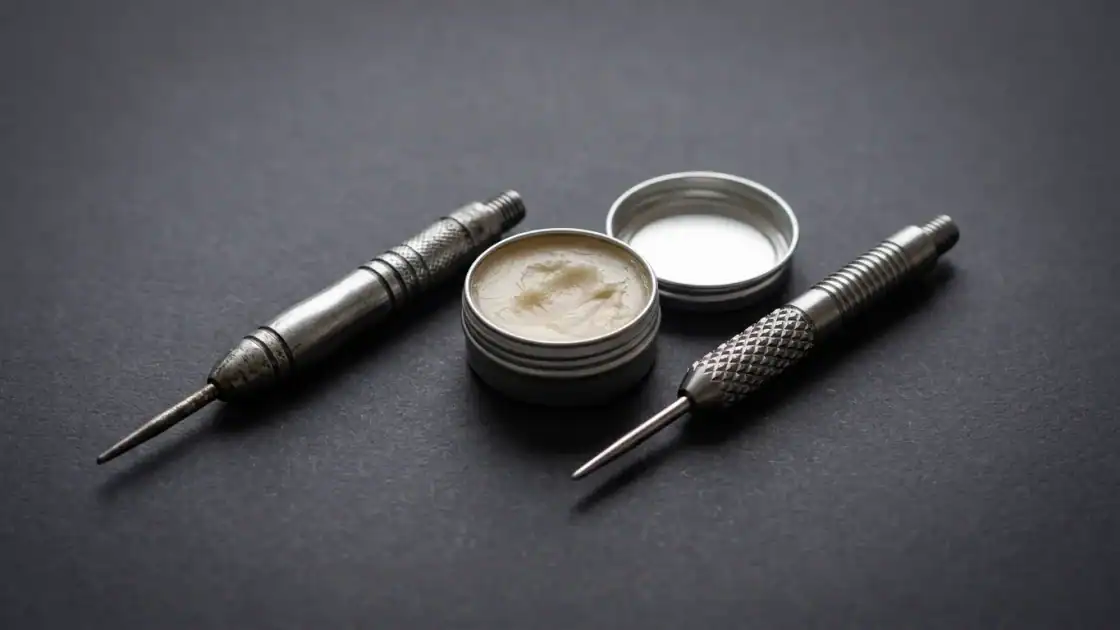
Grip wax is a tacky substance you apply to your fingers before throwing. It creates friction between your skin and the barrel surface without modifying the barrel itself. Products like Bull’s Grip Wax, Red Dragon Snakebite Wax, and generic bowler’s wax all work. A tin costs £3-5 (~$4-6.50) and lasts months.
Pros: cheap and reversible. No barrel modification needed. Works right away. Legal in all competition formats.
Cons: must reapply every few throws. Builds up on the barrel over time (clean regularly). Some players dislike the tacky feeling. Does not fix the barrel – only masks the problem.
Option 2: Grip tape or grip rings
Thin adhesive tape wrapped around the barrel’s grip zone provides a new textured surface. Some products are purpose-made for darts (like Target Titanium Grip Rings). Others are repurposed from fishing rod tape or tennis overgrip cut to size. Grip rings are silicone or rubber bands that sit in the groove between barrel sections.
Pros: adds texture to a completely smooth barrel. Cheap (£2-5 / ~$2.50-6.50 per pack). Can be removed and replaced.
Cons: adds thickness to the barrel, which changes the feel and effective diameter. Can shift or come loose during a session. May not be allowed in some competition rules (check with your league). Changes the weight distribution very slightly.
Option 3: Professional re-cutting
Some specialist dart shops and CNC machining services can re-cut the grip pattern on a worn barrel. The barrel is mounted in a lathe and new grooves are machined into the surface. This is the closest thing to restoring a barrel to new condition.
Pros: permanent fix. Restores actual grip texture. Can choose a different grip pattern from the original.
Cons: expensive (£15-30 / ~$19-40 per barrel, so £45-90 / ~$57-115 per set of three). Limited availability – not many shops offer this service. Removes material from the barrel, reducing its diameter and weight slightly. Only works on tungsten barrels – brass is too soft for precision re-cutting.
Option 4: Replace the barrel
If the grip pattern is worn flat and you do not want to add tape or wax, replace the barrel. A new set of 90% tungsten barrels costs £25-60 (~$32-75). You can keep your existing shafts, flights, and points (if removable) and just swap the barrel.
This is the right choice when the barrel has been through years of heavy use and the grip zone is polished mirror-smooth even after cleaning. No external product will replicate the feel of a properly machined grip pattern. For barrel options, see barrel shapes and dart weight guide.
KEY TAKEAWAY
Follow the decision tree: clean first (free). If that fails, try grip wax (£3-5 / ~$4-6.50). If wax is not enough, try grip tape (£2-5 / ~$2.50-6.50). If nothing works, the barrel is worn out – replace it (£25-60 / ~$32-75).
What About Grip Sprays and Rosin Bags?
Beyond wax and tape, there are other products marketed to help you re-grip a dart barrel or improve hold. Grip sprays apply a thin tacky coating directly to the barrel surface. Rosin bags (small cloth pouches filled with powdered tree resin) are squeezed to coat your fingers with a dry, grippy powder. Finger chalk works the same way as gym chalk – it absorbs moisture and increases friction.
Rosin bags are the most popular among league players because they are clean, dry quickly, and leave no residue on the barrel. According to TheDartScout’s survey of club players, rosin bags and finger chalk are preferred over wax by players with naturally sweaty hands because they absorb moisture rather than adding a sticky layer. Grip sprays are less popular because they leave a coating that attracts dust and requires cleaning after each session.
All of these products are legal in PDC and WDF competition. They are personal aids, not equipment modifications. If you want to re-grip a dart barrel without touching the barrel itself, these finger-applied products are the way to do it.
How Does Barrel Material Affect Grip Longevity?
Not all barrels wear at the same rate. The material determines how long the machined grip pattern survives regular use.
| Material | Grip lifespan | Why |
|---|---|---|
| Brass | 6-12 months | Soft metal. Grooves polish smooth quickly under finger friction. |
| Nickel-silver | 1-2 years | Harder than brass. Holds rings and grooves longer. |
| 80% tungsten | 2-3 years | Dense and hard. Knurl pattern resists wear well. |
| 90% tungsten | 2-5 years | Standard for serious players. Excellent grip retention. |
| 95-97% tungsten | 3-5+ years | Hardest common alloy. Finest grip patterns last longest. |
If you find yourself needing to re-grip a dart barrel every few months, the barrel material may be the root cause. Upgrading from brass to 90% tungsten costs £25-40 (~$32-50) but eliminates the grip problem for years. For the full material comparison, see 80 vs 90 vs 95 tungsten.
Does Your Grip Style Affect How Fast Barrels Wear?
Yes. Different grip styles create different wear patterns, and some wear barrels faster than others.
Pencil grip (two or three fingers, light hold): touches a narrow band of the barrel. Wear concentrates in a small zone, which wears through faster in that area even though overall barrel condition looks fine. When you re-grip a dart barrel with pencil-grip wear, the worn zone is obvious – a polished band on an otherwise textured surface.
Claw grip (fingertips pressed in, firm hold): distributes pressure across a wider area. Wears more evenly but with more force per throw. Claw grippers tend to wear knurl patterns faster because of the higher contact pressure.
Palm grip (multiple fingers wrapped around the barrel): covers the widest area with the lightest individual pressure. Palm grippers get the longest barrel life because the friction is spread across the entire grip zone. The tradeoff is that palm grippers need more grip texture to begin with because the light hold relies entirely on friction rather than finger pressure.
For grip technique details, see our grip styles guide. For how barrel shape interacts with grip, see barrel shapes.

WHEN TO STOP TRYING
Three signs the barrel needs replacing, not re-gripping.
The grip zone feels smooth immediately after a thorough clean. You can no longer feel individual grooves or knurl points under your fingertip. The barrel looks visibly polished in the grip area compared to sections you do not touch. If all three are true, no wax, tape, or cleaning will fix it. The CNC-machined texture is gone. Time for a new barrel.
How Do You Prevent Grip Loss in the First Place?
1
Clean Regularly
Every 1-2 weeks for regular players. Prevents residue from hardening in the grooves.
2
Dry Hands First
Wash and dry hands before playing. Avoid moisturiser or hand cream – it fills grooves fast.
3
Store Properly
Use a dart case. Barrels loose in a drawer collect dust and grit that accelerates wear.
Tungsten barrels last longer than brass because tungsten is harder and holds its machined texture better. A 90% tungsten barrel will maintain its grip pattern for 2-5 years of regular use. A brass barrel may lose its grip within 6-12 months. If you are currently using brass and finding yourself needing to re-grip a dart barrel frequently, upgrading to tungsten solves the problem permanently. See our tungsten vs brass comparison for the full breakdown.
SCOUT’S TAKE
Grip wax is the band-aid. Cleaning is the medicine. A new barrel is the cure. Most players jump straight to buying new darts when a clean would have fixed it. Try the free option first. If your barrels are genuinely worn through after years of use, that is a success story – you got your money’s worth. Now pick your next barrel knowing exactly what grip pattern and weight you want. That knowledge is worth more than any grip wax or tape. It means your next barrel will last longer because you chose the right texture for your throw from the start.
Frequently Asked Questions
Can I use sandpaper to re-grip a dart barrel?
You can, but it is not recommended. Sandpaper creates random scratches, not a consistent grip pattern. The result feels rough initially but wears smooth faster than a machined texture. It also removes material from the barrel, changing its weight and diameter. If you want to roughen a smooth barrel as a temporary fix, use 400-grit sandpaper very lightly. For a permanent solution, grip tape or a new barrel is better.
Is grip wax allowed in competition?
Yes. Grip wax, rosin bags, and finger chalk are permitted in PDC, WDF, and most league formats. They are treated the same as bowler’s wax in cricket or chalk in snooker – a legal aid. Grip tape on the barrel is less universally accepted. Check your specific league rules before using tape in a match. For full rules, see dart rules explained.
How long does a tungsten barrel grip last?
With regular cleaning and proper storage, a 90% tungsten barrel maintains its grip pattern for 2-5 years of regular play (3-5 sessions per week). Heavy daily players may see wear after 1-2 years. The grip zone wears first because it receives the most friction. The rest of the barrel may look new while the grip zone is smooth. Higher tungsten percentages (95%, 97%) are slightly harder and may last longer, but the difference is marginal. For more on tungsten grades, see 80 vs 90 vs 95 tungsten.
What grip pattern wears the slowest?
Scalloped barrels (with moulded finger channels) wear the slowest because the grip comes from the shape rather than surface texture. Ring grooves wear slower than knurl because the grooves are deeper and wider. Knurl wears fastest because the crosshatch points are shallow and fine. Micro-grooves fall between rings and knurl. If longevity matters, choose ringed or scalloped over knurled.
Should I choose a different grip pattern when replacing a barrel?
If your old barrel’s grip wore out faster than expected, consider switching to a deeper or more durable pattern. Move from micro-groove to ringed, or from knurl to scalloped. A deeper groove takes longer to polish flat. Also consider whether your grip style matches the barrel shape – a pencil grip on a wide bomb barrel concentrates force on a tiny area and wears through faster than the same grip on a straight barrel. Match the barrel to the grip for the best longevity. For how to re-grip dart barrel patterns effectively, aligning your grip style with the right texture is more important than choosing the most aggressive pattern available.
For cleaning methods, read how to clean tungsten darts. For grip technique, see dart grip styles. For barrel choices, read dart barrel shapes and how to choose dart weight. To understand every component, see anatomy of a dart. New to darts? Start with the beginner’s guide.