QUICK ANSWER
The best dart weight for beginners is 22g to 24g steel tip, and 23g if you want one safe number to buy without thinking about it.
That range is heavy enough to fly straight while your throw is still forming, but not so heavy it drops. If you play on an electronic board, drop to roughly 18g to 20g soft tip. The weight is a starting point, not a fix for technique.
Every beginner asks the same question in the shop or the search bar: what weight should I actually buy? Most guides answer “try everything and see”, which is useless when you’re standing there with one set to purchase. So here’s a straight answer first, then the reasoning, then how to tell if you’ve guessed wrong.
The best starting weight for beginners
Buy 23g steel tip. If a shop only has 22g or 24g, either is fine. That 22g to 24g band is where most recreational players settle for good, and it’s also the range most professionals throw, so you won’t outgrow it. There’s nothing beginner-only about it: you’re buying into the standard, not a training-wheels version.
The reason 23g works as a default is that it sits dead centre. It’s the single most common weight sold across the industry and the most common weight among the professionals. Start there, throw a few hundred darts, and only move if something specific tells you to. The next sections cover exactly what those signals look like.

Why does this range work for new players?
It comes down to forgiveness. When your throw is still forming, no two releases are quite the same. A dart in the 22g to 24g range carries enough momentum to fly straight anyway, so small inconsistencies in your release don’t send it flying off target. The mass does some of the work your technique can’t do yet.
The classic way to picture it: a heavier dart is a truck, and a lighter dart is a race car. The truck is stable and shrugs off small flaws, carrying itself to the board with a flatter path. The race car is fast and precise, but it exposes every wobble in your throw. Beginners want the truck. It lets you build a repeatable motion instead of fighting the equipment on every dart.
Below that logic sits a practical point: 22g to 24g sets are the most widely stocked weights on the market. Whatever brand, grip, or barrel shape you like, it almost certainly exists in this range, so you’re never forced to compromise on the rest of the dart to get the weight right.
KEY CONCEPT
Weight buys forgiveness while your throw stabilises. It does not buy accuracy. A 24g dart won’t hit trebles a 20g dart missed if your release is the problem. Pick a sensible weight once, then spend your energy on a repeatable throw.
For the full decision framework, including barrel shape and grip, our how to choose dart weight guide goes deeper than a single starting number.
Signs your darts are too light
The tell-tale symptom is fishtailing. If your darts wobble or wag from side to side on the way to the board, or land at inconsistent angles, the weight probably isn’t giving the throw enough stability to settle. A too-light dart leaves your hand fast and punishes any flick or snatch in your release.
You’ll also feel it as a lack of “carry”. If it seems like you have to throw harder to reach the board cleanly, and your scoring darts scatter more than they group, a couple of extra grams often settles everything down. Try moving up 2g before you change anything about your technique.
Signs your darts are too heavy
The opposite symptom is dropping. If your darts consistently land low, below where you’re aiming, the dart is likely too heavy for your throwing speed. You’re not generating enough pace to carry the mass, so gravity wins on the way in. That low grouping is the single clearest sign to go lighter.
The other cue is feel. A dart that seems slow, cumbersome, or like hard work to launch is fighting you. Darts should feel like they want to leave your hand, not like you’re heaving them. If yours feel like a chore, drop 2g and see if the motion frees up.
SCOUT TAKE
Diagnose with the grouping, not the score. Darts landing low and tight means too heavy. Darts spraying and wobbling means too light. Darts grouped tightly in the wrong place means the weight is fine and your aim needs work. Read the pattern before you change the dart.
Steel tip vs soft tip: the weight differs
Which board you play on changes the number completely. Steel-tip darts, for traditional bristle boards, live in that 22g to 24g beginner range. Soft-tip darts, for electronic boards, are deliberately lighter, and most soft-tip players throw around 18g to 20g. Some soft-tip leagues even cap weight near 25g to stop heavy darts damaging the machines.
There’s a labelling quirk worth knowing too. On steel-tip darts, the printed weight is usually the barrel and point only, so your finished dart with shaft and flights weighs 1g to 2g more. Soft-tip darts are normally weighed fully assembled. So a “20g” steel-tip barrel and a “20g” soft-tip dart aren’t measuring the same thing. Our steel tip vs soft tip guide covers the wider differences.
Which beginner darts should you actually buy?
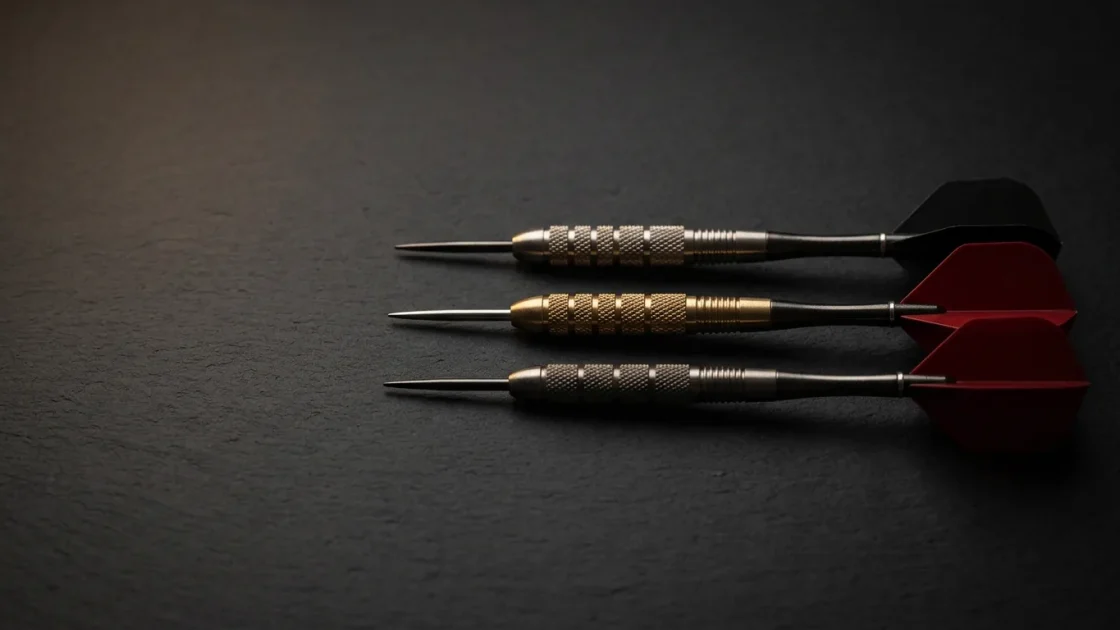
Three sets cover the sensible starting options: a cheap brass set to learn on, a tungsten set you’ll keep, and a soft-tip set if you’re on an electronic board. All are in the right weight range for a beginner.
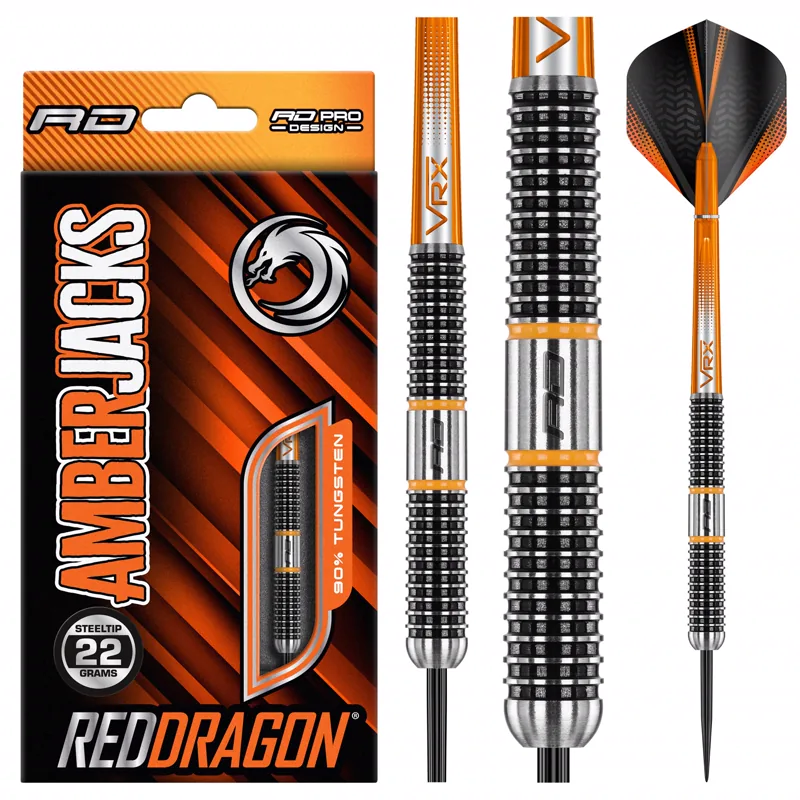
Red Dragon Amberjack 22g Steel Tip
90% tungsten in the ideal beginner weight. Slimmer than brass, and good enough to keep for years.
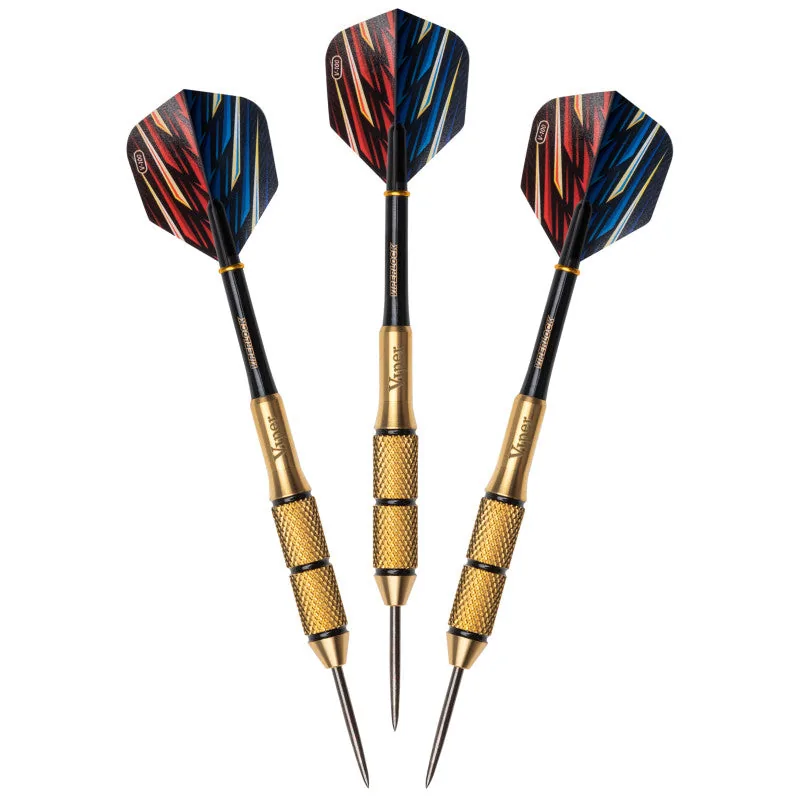
Viper Elite Brass 23g Steel Tip
Knurled brass barrels at the safe 23g default. Fatter than tungsten, but the cheapest way to learn a grip.
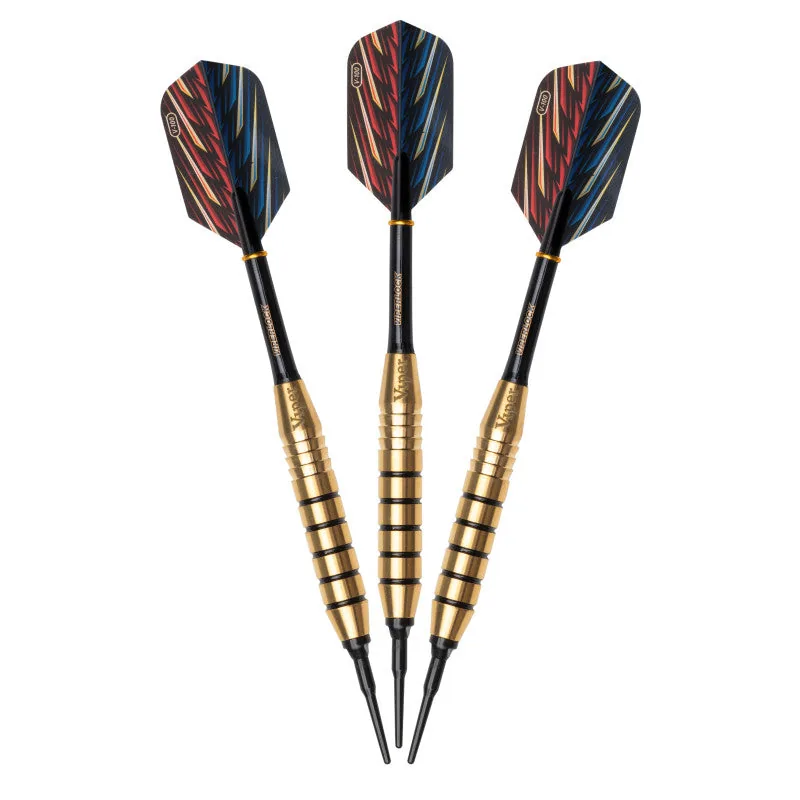
Viper Elite Brass 18g Soft Tip
The lighter soft-tip weight electronic boards want, in the same brass build. For plastic-tip play.
For a wider shortlist beyond weight alone, our best darts for beginners guide ranks full sets on grip, barrel, and value.
How to adjust as you improve
Change weight slowly and change it alone. Move in 1g or 2g steps, never a big jump, and give each new weight at least two full sessions before you judge it. The first session with any change usually feels worse because you’re fighting the habit of the old dart, so a single bad night proves nothing.
As throws mature, many players drift slightly lighter. Once your release is fast and clean, you no longer need the extra mass to stabilise it, and a lighter dart rewards the precision you’ve built. That’s the well-known pattern of beginners going heavier and experts going lighter. But it’s a drift, not a rule: Gerwyn Price throws 24g at the top of the sport while Peter Wright throws 22g, and the range runs from Stephen Bunting on 12g to Ryan Searle on 32g.
23g
the safest single starting weight for steel-tip beginners
18-20g
the lighter range soft-tip players use on electronic boards
1-2g
how much shafts and flights add to a steel-tip barrel’s printed weight
A two-minute test if you still can’t decide
If a shop lets you throw before buying, this beats any chart. Take a 22g and a 24g set and throw ten darts at the treble 20 with each, without overthinking the technique. You’re not judging the score. You’re judging two things: which set left your hand more naturally, and where the darts landed.
If the heavier darts dropped low and felt like effort, go lighter. If the lighter darts wobbled or sprayed, go heavier. If both felt roughly the same, buy the 24g, because a still-forming throw benefits more from stability than speed, and you can always drop weight later. The set that disappears from your attention mid-throw is the right one. A dart you’re conscious of is a dart you’re fighting.
No board handy? Default to 23g and stop deliberating. The difference between 22g and 24g is smaller than the difference a month of practice makes, and no beginner has ever plateaued because of one gram. Buy, throw, and let a few hundred darts tell you what to change.
Frequently asked questions
Are heavier darts easier for beginners?
Generally yes, within reason. A heavier dart in the 22g to 24g range carries more momentum, flies straighter, and forgives the small release errors every new player makes. Go too heavy, though, and the dart drops low because you can’t generate enough pace. Heavier helps up to a point, not without limit.
What weight do most beginners use?
Most beginners land between 22g and 24g steel tip, with 23g the single most common choice. It’s also the most popular weight among professionals, so it’s a starting point you won’t outgrow. On electronic boards, most players use lighter 18g to 20g soft-tip darts.
Does dart weight affect accuracy?
Indirectly. The right weight makes a consistent throw easier by adding stability, but weight itself doesn’t aim the dart. If your release is inconsistent, changing grams won’t fix your grouping. Pick a sensible weight, then work on a repeatable throw, which is what actually drives accuracy.
Is 22g or 24g better for a beginner?
Both are good, and the difference is throwing style. If you throw fast and flat, 22g suits you. If you lob the dart in a higher arc, 24g gives more stability during the slower flight. If you have no idea yet, split the difference at 23g and adjust later.
Should I start with brass or tungsten darts?
Brass is cheapest and fine for learning a grip, but the barrels are fatter and less durable. Tungsten is denser, so the same weight makes a slimmer barrel that groups tighter, and it lasts longer. If darts might become a real hobby, a tungsten set in 23g is worth the small extra cost up front.
Does the printed weight include the flights and shafts?
On steel-tip darts, usually not. The printed number is the barrel and point, so your assembled dart weighs 1g to 2g more once the shaft and flights are on. Soft-tip darts are normally weighed fully assembled, so the two systems aren’t directly comparable by the number alone.
The best dart weight for beginners isn’t a secret, it’s 22g to 24g steel tip, 23g if you want to stop deciding and start throwing. Buy in that range, read your grouping to catch a wrong guess, and change weight only in small steps once your throw settles. Everything else about improving lives in the technique, not the grams. Start with our beginner’s guide to darts for the fundamentals, and the dart weight guide when you’re ready to fine-tune.