QUICK ANSWER
Steel tip darts go into a bristle board. Soft tip darts go into an electronic board. Choose the board first.
Both formats use the same board layout and the same core games, 501 and cricket. The differences are the dart (a metal point at around 20-26g versus a plastic tip, usually 20g or lighter), the board (self-healing sisal versus plastic segments with sensors), and the scoring (by hand versus automatic).
Go steel tip with a bristle board if you want to play in pub leagues or practise the game you see on TV. Go soft tip with an electronic board for auto-scoring, online play, party games, or a home with young children.
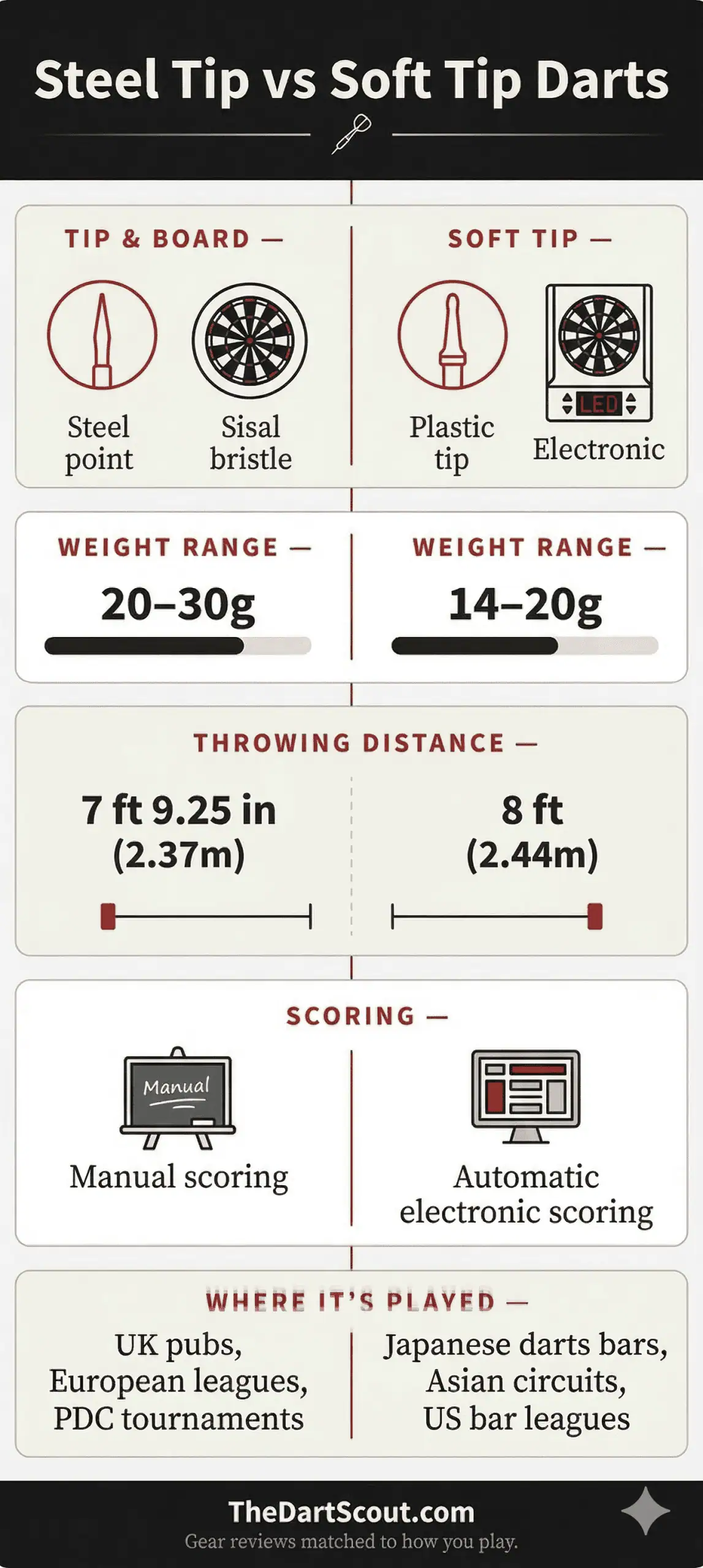
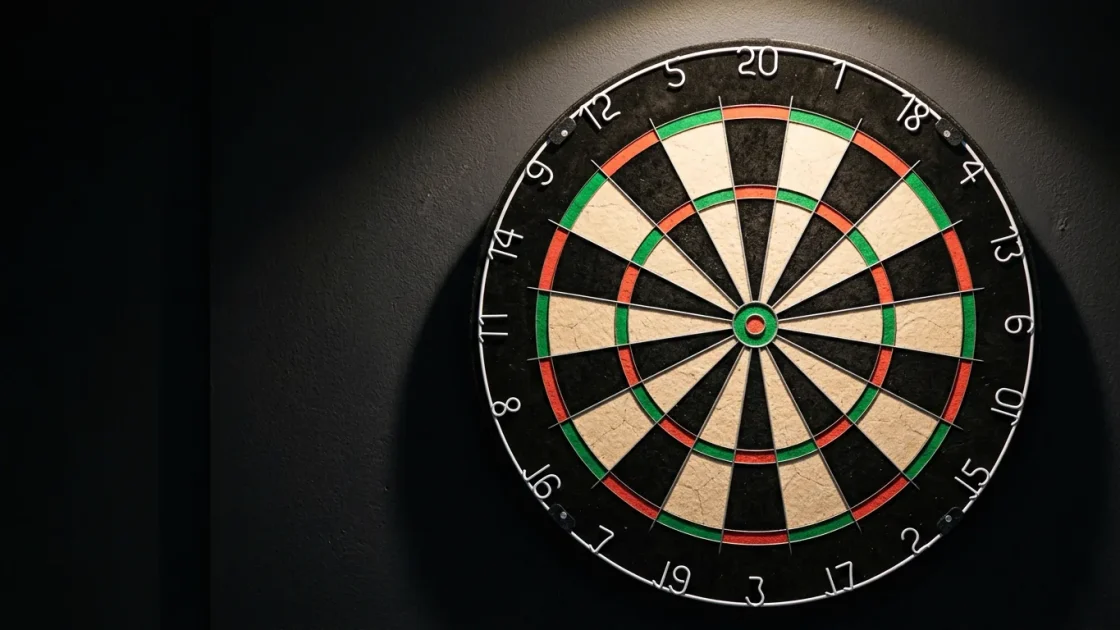
Darts is one sport played in two formats. Steel tip and soft tip share the same board: 20 numbered segments, doubles, trebles, and a bullseye. But the equipment, the venues, and the competitive worlds are different enough that they work almost like separate sports.
The dart and the board go together, so “steel tip vs soft tip” and “bristle vs electronic” are really the same decision. Below, we compare the equipment, the two boards on price, noise, durability, and safety, how each format feels, and where each is played competitively.
What Are Steel Tip and Soft Tip Darts?
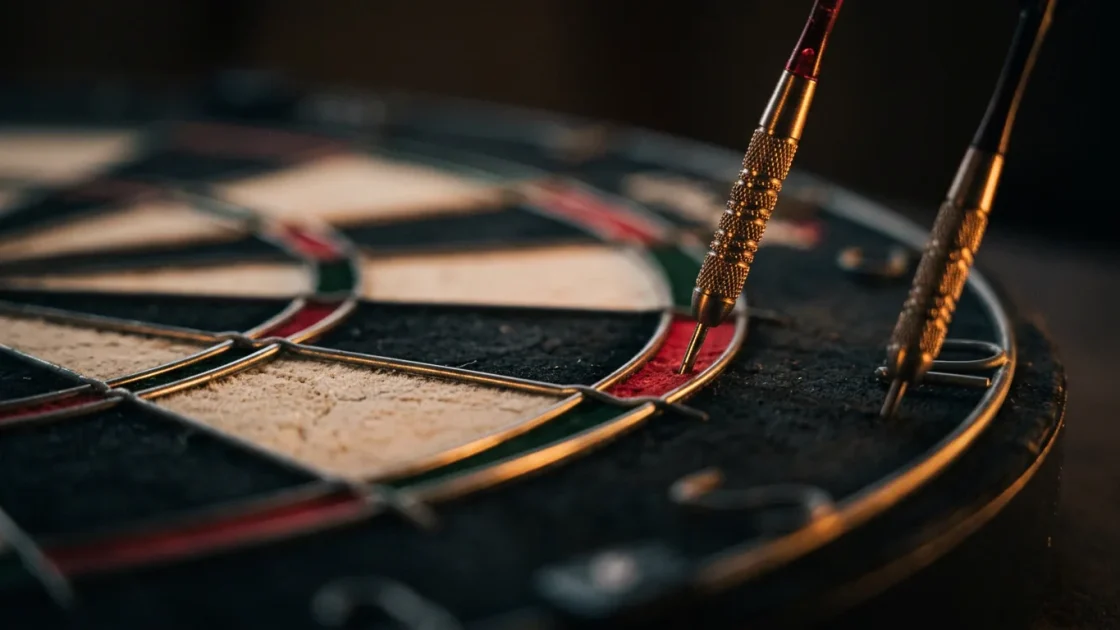
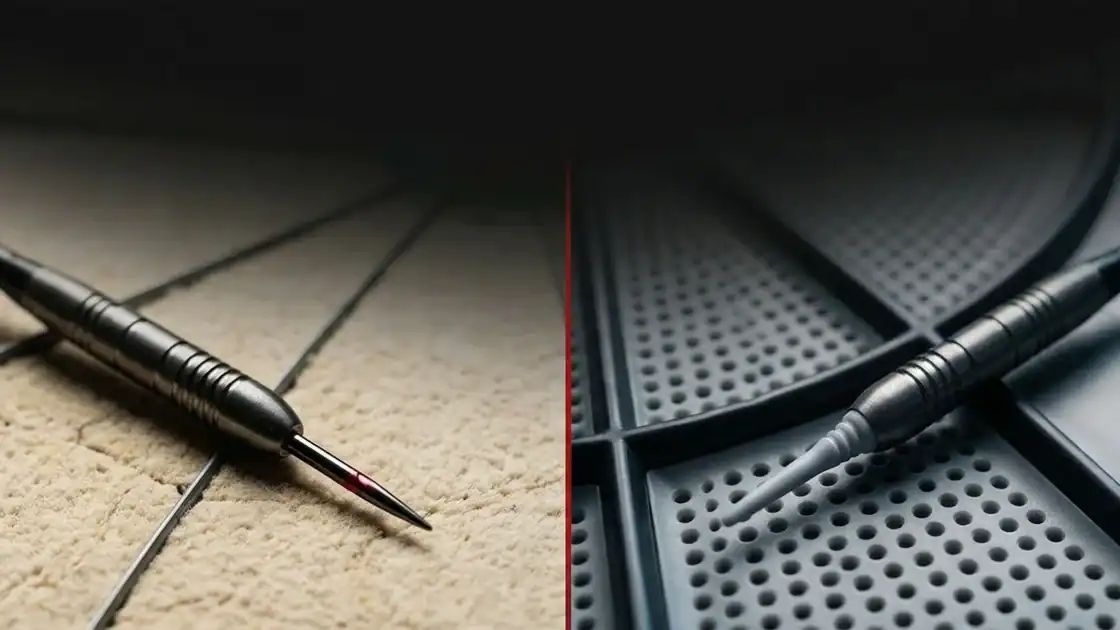
Steel tip darts have a sharpened metal point and are thrown at a bristle dartboard made from compressed sisal fibres. The point wedges into the fibres and the dart stays where it lands. Scoring is done by hand – mental arithmetic, a chalkboard, or a scoring app. This is the original format of modern darts and the one played in professional events on television.
Soft tip darts have a plastic point and are thrown at an electronic dartboard. The board’s plastic face is covered in small holes. Sensors behind it detect which segment you hit and keep score for you. Electronic darts date back to the 1970s in the United States, where Arachnid pioneered soft-tip boards, and soft tip later became the dominant format in Japan and much of East Asia.
KEY TAKEAWAY
The names refer to the tip, but the difference runs through the whole setup: the board, the scoring, the weight of the dart, and where you play.
What Are the Equipment Differences Between Steel Tip and Soft Tip Darts?
The dartboard
A bristle board is compressed sisal from the agave plant, held under pressure by a steel band. When a dart is pulled out, the fibres close back together – the “self-healing” that lets a good board last for years. Wire dividers separate the segments, and better boards use thin blade wire to cut bounce-outs. The board is purely analogue: no power and no sensors.
An electronic board is moulded plastic with thousands of small holes. Behind the face sits a sensor matrix that registers each hit, and a built-in display tracks scores, remaining totals, and often checkout suggestions. Many boards now connect to apps and online play.
The dart
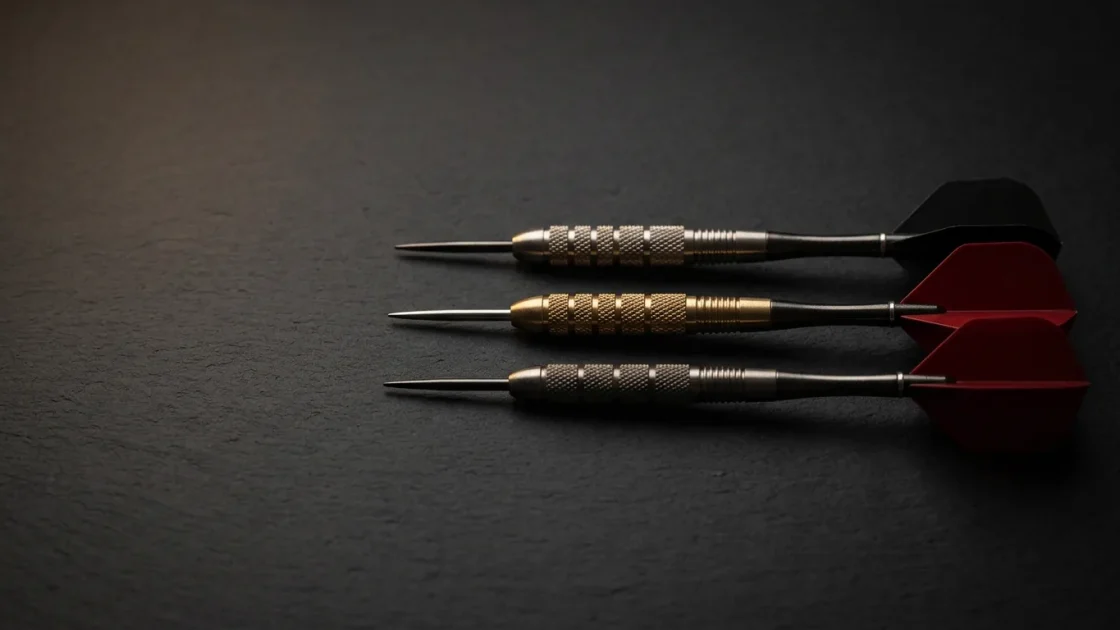
Steel tip darts are heavier: most players throw somewhere between about 20g and 26g, usually with tungsten barrels for a slim profile. Soft tip darts are lighter because electronic boards are built for lighter darts – most are designed for darts of around 18-20g, although DARTSLIVE’s rules allow up to 25g. Barrels come in the same materials in both formats, and many models are sold in both versions.
Scoring
Steel tip scoring is manual, and that’s part of the tradition – players learn their checkout routes and do the maths under pressure. Soft tip boards do it automatically, and commercial machines from companies like DARTSLIVE and Phoenix save match stats to player accounts through cards or apps.
| Feature | Steel Tip | Soft Tip |
|---|---|---|
| Tip | Sharpened steel | Plastic |
| Board | Compressed sisal (bristle) | Plastic segments with sensors |
| Typical dart weight | About 20-26g | About 16-20g |
| Scoring | Manual (chalk, app, mental) | Automatic |
| Throwing distance | 2.37m (7 ft 9.25 in) | 2.44m (8 ft) on most boards |
| Bounce-outs | No score if the dart falls out | Usually scores if the sensor registered the hit |
| Standard for | PDC, WDF, pub leagues | DARTSLIVE, Phoenix, soft tip leagues |
Bristle vs Electronic Dartboard: Which Should You Buy?
If you’re choosing a board rather than just learning the difference, these are the factors that matter.
Price and running costs
Bristle boards are cheaper to buy and cost nothing to run. A Winmau Blade 6 Dual Core, one of the most popular home competition boards, sells for around £60, while a well-regarded electronic board such as the GranBoard 3s is closer to £250. Electronic boards also have running costs: soft tips break and need replacing, segments can crack, and boards need power. Some models let you replace individual segments; cheaper sealed units may be finished when one fails.
Durability
A good bristle board with regular rotation lasts years of home play. The treble 20 wears first, and turning the number ring spreads the wear across the board. Electronic boards have more failure points – cracked segments, worn sensors, and the electronics themselves – although the better boards have replaceable parts.
Noise
Many buyers assume electronic is the quiet option. It usually isn’t: soft tips snapping into plastic make a sharp click, and many boards add sound effects on top. A steel dart going into sisal is a muted thud. The catch with bristle is vibration travelling through the mounting into the wall, which a freestanding stand or a decoupled mount solves – see keeping a dartboard quiet.
Bounce-outs
On a bristle board, a bounce-out happens when the point hits a wire, and thin blade-wire boards keep them rare – see why darts bounce out. On an electronic board, a tip that hits the plastic between holes can deflect, but if the sensor registered the impact, the dart usually still scores even if it falls to the floor.
Safety and game variety
Electronic wins on both. Plastic tips won’t damage walls or floors and are far safer around children, while steel tips need a surround and a bit of care in a busy room. Electronic boards also come with dozens of built-in games beyond 501 and cricket, and the auto-scoring means nobody has to know the rules – ideal for mixed groups and parties.
BRISTLE + STEEL TIP
Buy one if…
You want to play in leagues or tournaments, practise the game you see on TV, keep running costs at zero, or keep the noise down in a flat.
ELECTRONIC + SOFT TIP
Buy one if…
You want automatic scoring, online play, or party games, you live where soft tip leagues are common, or the board will be used around young children.
Can you have both? Plenty of players do: a bristle board for serious practice and an electronic board for social nights. For board recommendations, see the best dartboard for home.
How Do Scoring and Gameplay Differ Between Steel Tip and Soft Tip?
Both formats play the same core competitive games – 501, 301, and cricket – on the same board layout. Where they diverge is in finishing rules and variety. Steel tip 501 is “double out”: you must finish on a double. Some soft tip leagues and machines use double out too, but many default to a straight-out finish, where you only need to reach zero.
The throwing distance differs as well. The steel tip oche is 2.37m (7 ft 9.25 in) from the face of the board, while most soft tip boards use 2.44m (8 ft), about 7cm further back. Players who switch formats often find the extra distance and the lighter dart take some getting used to. For full measurements, see how to set up a dartboard.
How Does Each Format Feel to Play?
Steel tip darts are heavier and embed firmly in the sisal. There’s a muted thud on impact, and the dart stays exactly where it lands, so you can watch your grouping build up in the treble.
Soft tip darts land with a lighter click as the tip enters a hole. The hole holds the dart, not friction. The lighter dart, the longer distance, and the different feel all take time to adjust to when you switch. That’s why most competitive players commit to one format for their main practice.
SCOUT’S TAKE
Neither format is inherently harder. Steel tip rewards a heavier dart and a repeatable release into a self-healing surface. Soft tip rewards precision with a lighter dart from slightly further back. The skills transfer, but the feel doesn’t – treat them as related but separate disciplines.
Where Are Steel Tip and Soft Tip Darts Played Competitively?
Steel tip: pubs, leagues, and the televised game
Steel tip grew out of British pub darts, and it’s the format you see on TV. The Professional Darts Corporation (PDC) and the World Darts Federation (WDF) run the major circuits. At grassroots level, pub leagues across the UK, Ireland, the Netherlands, Germany, and Australia play double-out 501 on bristle boards.
Soft tip: Japan, East Asia, and US bar leagues
Soft tip’s competitive heartland is Japan, where it accounts for around 80% of the darts market, according to Darts Corner. Professional circuits such as JAPAN and PERFECT run soft tip tours, and DARTSLIVE and Phoenix machines fill dedicated darts bars. DARTSLIVE’s invitationals have drawn steel tip stars too – Phil Taylor reached the final of SUPER DARTS, where he lost to Japan’s Haruki Muramatsu, as Darts News reported. In the United States, soft tip is strong in bar leagues built around electronic boards.
The two worlds are converging
The crossover now runs both ways. The PDC runs an Asian Tour with a growing calendar, Haruki Muramatsu has played in the PDC World Championship, and Singapore’s Paul Lim – who hit the first nine-dart finish at a World Championship, in 1990 – has competed at the top of both formats. The grassroots cultures remain distinct: pub leagues and manual scoring on one side, neon-lit darts bars and online rankings on the other.
Can You Use Steel Tip Darts on a Soft Tip Board?
No. A steel point will damage the plastic segments and the sensors behind them, and it usually voids the warranty. The reverse doesn’t work well either: soft tips don’t grip sisal the way a steel point does, so they tend to bounce out and wear down quickly.
What does work is converting the dart. Many barrels accept both point types, so you can unscrew a steel point and fit a soft tip adapter, or the other way round, and use the same barrels on either board. The weight shifts slightly with the tip, but the grip and feel stay the same. See dart point types for conversion options.
Frequently Asked Questions
Can you use steel tip darts on an electronic board?
No. Steel tips damage the plastic surface and the sensors of an electronic board. Use soft tip darts on electronic boards and steel tip darts on bristle boards, or fit conversion points so one set of barrels works on both.
Can you use soft tip darts on a bristle board?
Not really. Plastic tips don’t grip sisal the way a steel point does, so they bounce out often and wear down quickly, as Decent Darts explains. If you want to use soft tip barrels on a bristle board, fit steel conversion points instead.
Is an electronic dartboard quieter than a bristle board?
Usually not. Soft tips clicking into plastic segments are louder through the air than a steel tip going into sisal, and many electronic boards add sound effects. Bristle boards can transmit a thump through the wall, but a freestanding stand or decoupled mount fixes that.
Which is better for a beginner, bristle or electronic?
It depends on what you want. If you want to learn darts properly and maybe join a league, start with a blade-wire bristle board and steel tip darts. If the board is for a family games room where people of all ages will play, an electronic board is easier because nobody needs to know how to score.
Why is the throwing distance different for steel tip and soft tip?
The two formats grew up under different governing bodies, and their standards were set separately. The steel tip oche is 2.37m (7 ft 9.25 in) and most soft tip boards use 2.44m (8 ft). Always check the rules of the league or machine you play on.
Is soft tip darts played professionally?
Yes. Soft tip has its own professional circuits, mainly in Japan and East Asia. JAPAN, PERFECT, and DARTSLIVE all run tours. DARTSLIVE’s invitational events often attract steel tip players too.
Do professional PDC players use soft tip darts?
PDC tournaments are played exclusively with steel tip darts on bristle boards. Several PDC players have competed in soft tip invitational events, though, and a growing number of Asian players who started in soft tip now compete on the PDC circuit.
For terminology used above, check the darts glossary. For board picks, see the best dartboard for home, and for mounting it correctly, follow how to set up a dartboard. To choose a weight, read how to choose dart weight. For point types and conversion options, see dart point types, and for game formats and scoring, see dart rules explained. New to darts? Start with the beginner’s guide.