QUICK ANSWER
A regulation dartboard is 451mm (17.75 in) across, hung with its bullseye 1.73m (5 ft 8 in) off the floor, and thrown from an oche 2.37m (7 ft 9.25 in) from the board face.
The diagonal from the oche to the bull is 2.93m (9 ft 7.375 in), a single measurement that checks both the height and the distance at once. Every other figure, from the 8mm ring widths to the 12.7mm bull, is listed below in metric and imperial.
This is the full reference. Not just the height and the throwing distance that most setup pages stop at, but every regulation figure on the board: the diameter, the scoring area, each ring width, both bull sizes, and the mounting and distance measurements, in metric and imperial. Bookmark this page, or print the master table and tape it up inside the cupboard where your darts live.
Dartboard dimensions at a glance
Here is every regulation measurement in one table. These are the World Darts Federation figures, and the same steel-tip standard applies across the governing bodies, so this is what’s used everywhere from a garage board to a televised stage.

| Measurement | Metric | Imperial |
|---|---|---|
| Board diameter | 451 mm | 17.75 in |
| Scoring area diameter (to outer double) | 340 mm | 13.39 in |
| Outer edge of treble ring diameter | 214 mm | 8.43 in |
| Double and treble ring width | 8 mm | 0.315 in |
| Bull centre to outer double | 170 mm | 6.69 in |
| Bull centre to outer treble | 107 mm | 4.21 in |
| Inner bullseye diameter | 12.7 mm | 0.5 in |
| Outer bull (25) diameter | 31.8 mm | 1.26 in |
| Bullseye height (floor to centre) | 1.73 m | 5 ft 8 in |
| Oche distance (board face to line) | 2.37 m | 7 ft 9.25 in |
| Diagonal (oche to bull centre) | 2.93 m | 9 ft 7.375 in |
Board size and playing area
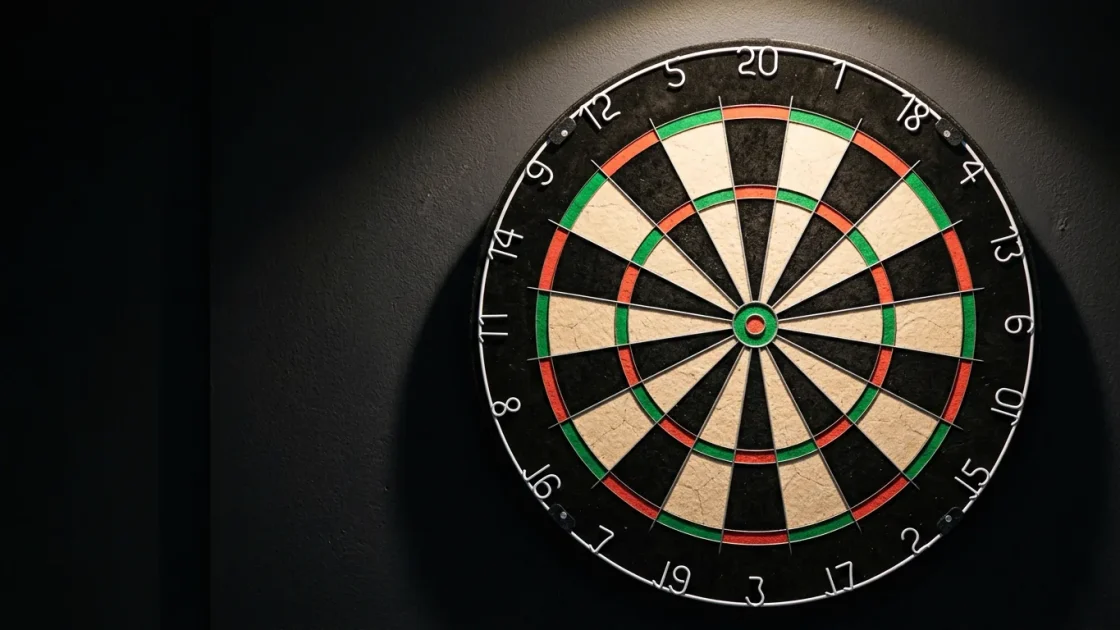
A regulation board measures 451mm (17.75 in) across the full playing surface, divided into 20 numbered segments. That figure is the sisal face itself. You’ll sometimes see 18 inches quoted, but that includes the wire and surround, not the scoring board.
The scoring area, out to the far edge of the double ring, is 340mm (13.39 in) in diameter. Everything past that thin double band is off the board, worth nothing. The outer edge of the treble ring sits at 214mm (8.43 in) diameter, marking the boundary of the big single-scoring zone in the middle of each segment.
Ring widths, double, treble, and the rest
Treble and double ring widths
Both the double and the treble ring are 8mm (0.315 in) wide. That’s the actual target you’re hitting when you go for a treble 20, a band barely wider than a pencil. It explains why maximums are hard: three darts into an 8mm strip, with the first two partly in the way.
Their positions are fixed by distance from the centre. The treble ring’s outer edge is 107mm (4.21 in) from the bull, and the double ring’s outer edge is 170mm (6.69 in). Subtract the 8mm band and the inner edges fall at 99mm and 162mm respectively.
Bull and outer bull diameters
The inner bullseye, worth 50, is 12.7mm (0.5 in) across, exactly half an inch. The outer bull ring around it, worth 25, brings the total bull area to 31.8mm (1.26 in) in diameter. The inner bull counts as a double, which is why it can finish a leg and forms part of the 170 maximum checkout.
KEY CONCEPT
Every scoring band on the board is defined by its distance from the bull centre, not by any mark you can see while throwing. That’s why a board that’s hung crooked or at the wrong height quietly distorts every measurement at once, and why the diagonal check below matters so much.
Mounting height and throwing distance
Two numbers set up a board. The bullseye centre sits 1.73m (5 ft 8 in) from the floor, and the oche, the throwing line, sits 2.37m (7 ft 9.25 in) from the face of the board. Both are non-negotiable regulation figures, unchanged since the World Darts Federation standardised the distance in 1977.

Two details trip people up. First, the oche is measured horizontally from the board face, not from the wall behind it, so a thick board or a cabinet pushes your line out. Second, the height is to the centre of the bull, not the top or bottom of the board. Measure to the bull and everything else falls into place.
The diagonal is the professional’s shortcut. Stretch one tape from the front edge of the oche, along the floor and up to the centre of the bull, and it should read 2.93m (9 ft 7.375 in). Because that diagonal is the hypotenuse of the height and the distance together, a correct diagonal proves both are right in a single measurement. It’s the fastest way to check a setup on an uneven floor. Our how to set up a dartboard guide walks through the hanging process step by step.
1.73 m
floor to bullseye centre (5 ft 8 in)
2.37 m
board face to the oche (7 ft 9.25 in)
2.93 m
diagonal oche to bull, the two-in-one check (9 ft 7.375 in)
How to measure your own setup correctly
Knowing the numbers is only half the job. Getting them onto your wall accurately is where most home setups drift. Work in this order and the measurements police each other.
Start with the height. Find the centre of the bull on your board, hold a tape to the floor directly below it, and set the board so that centre reads 1.73m. A spirit level across the top of the board at this stage saves a crooked hang, because a tilted board moves the bull off true even when the tape says 1.73m. Mark the wall before you commit the fixings.
Next, drop a plumb line or a weighted string from the board face straight to the floor, and mark where it touches. Measure 2.37m out along the floor from that mark, not from the wall, and that’s the front edge of your oche. A raised throw line, a strip of tape, or a proper oche marker all work, as long as the leading edge sits on the 2.37m point.
Finish with the diagonal. Run one tape from the front of the oche up to the bull centre: 2.93m confirms the whole setup in a single reading. If it’s out, your height or your distance is wrong, and it’s far easier to fix now than after you’ve been throwing at a subtly wrong board for a month. The full walkthrough, including stud-finding and surround fitting, lives in our home darts setup guide.
Why the exact numbers matter
These aren’t arbitrary figures. The whole scoring geometry of the board, from the 8mm treble band to the half-inch bull, is calibrated around a player standing at exactly 2.37m looking at a bull exactly 1.73m high. Move either and you subtly change the angles your darts arrive at, which is why a board set up wrong at home never quite translates to a match on a correct one.
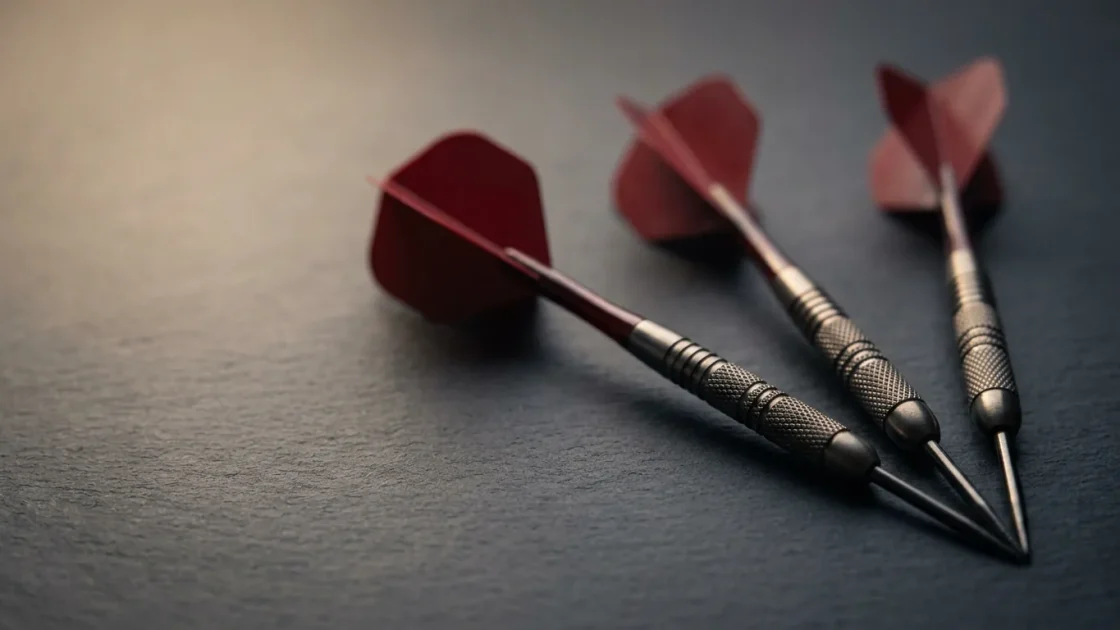
It also matters for the dart itself. The relationship between the board’s fixed target sizes and the dart in your hand is what makes barrel and point choices meaningful. If you want to understand how the pointy end meets that 8mm ring, our breakdown of the anatomy of a dart covers every component and how it reaches the board. Get the setup right first, though: no equipment fixes a board hung at the wrong height.
Steel tip vs soft tip: distance differs
Everything above is the steel-tip standard for bristle boards. Electronic soft-tip boards keep the same 1.73m bullseye height but push the oche back to 2.44m (8 ft), about 7cm further than the steel-tip line. The board face on most electronic machines also sits slightly proud of the wall, so measure from the playing surface as always.
If you switch between the two formats, that extra 7cm is enough to feel. It’s a small but real reason darts thrown well on one setup can land slightly low on the other until you adjust. The steel tip vs soft tip guide covers the equipment side of the same split.
Wheelchair and youth measurements
For wheelchair players, WDF rules lower the bullseye height to 1.37m (4 ft 6 in) so the board sits at a fair throwing level from a seated position. The oche distance stays exactly the same at 2.37m. Only the height changes.
For young children, there’s no separate governing-body standard. Many families just hang a second board lower, or move the throwing line closer. The scoring geometry is fixed to the board itself, so shortening the distance keeps the game fun for smaller arms. You don’t need to buy anything special to make it work for them.
PRACTICAL TIP
When you hang a board, check the diagonal last. Get the height to 1.73m and the distance to 2.37m, then confirm the diagonal reads 2.93m. If it doesn’t, one of your two measurements is off, and the diagonal tells you to re-check before you ever throw a dart.
Frequently asked questions
How high should a dartboard be?
The centre of the bullseye should be 1.73m (5 ft 8 in) from the floor. This is the same for steel-tip and soft-tip boards and applies regardless of the player’s height. Measure to the centre of the bull, not the top or bottom edge of the board.
How far do you stand from a dartboard?
The oche, or throwing line, is 2.37m (7 ft 9.25 in) from the face of the board for steel-tip darts. Soft-tip electronic boards use a longer 2.44m (8 ft) distance. The measurement is taken horizontally from the board face, not the wall.
What is the diameter of a dartboard?
A regulation board is 451mm (17.75 in) in diameter across the scoring surface. The playable scoring area, out to the edge of the double ring, is 340mm (13.39 in). Figures around 18 inches include the wire and surround rather than the board itself.
What is the diagonal measurement for a dartboard?
2.93m (9 ft 7.375 in) from the front of the oche to the centre of the bullseye. Because it combines the height and distance into one line, a correct diagonal confirms both are right at once, which makes it the quickest way to check a setup, especially on an uneven floor.
How wide are the double and treble rings?
Both are 8mm (0.315 in) wide. The treble ring’s outer edge sits 107mm from the bull centre and the double ring’s outer edge sits 170mm. That narrow 8mm band is the actual target for a treble, which is why hitting three in a row for a 180 is hard.
What height is a dartboard for wheelchair users?
Under WDF rules the bullseye is lowered to 1.37m (4 ft 6 in) for wheelchair players, while the throwing distance stays at the standard 2.37m. Only the mounting height changes; every measurement on the board itself is identical.
That’s the complete dartboard specification: a 451mm board, an 8mm target ring, a bull half an inch across, hung at 1.73m and thrown from 2.37m, with a 2.93m diagonal to prove it. Get those three setup numbers right, confirm them with the diagonal, and the fixed geometry of the board does the rest for you. When you’re ready to hang one, the setup guide has the step-by-step, and the how to choose a dartboard guide covers which board to buy in the first place.