QUICK ANSWER
The highest checkout in darts is 170, taken as treble 20, treble 20, bullseye. It’s the only three-dart route to 170 and the highest possible finish in the game.
Players call it the “Big Fish”. Nothing above it can be finished, and oddly, several numbers just below it can’t be finished in three darts either. The maths of why is simpler than it looks.
Ask any darts fan for the magic number and they’ll say 170. It’s the perfect finish, the biggest catch, and the one that commentators lean into with real, unmistakable excitement. This guide explains what the highest checkout in darts actually is, the simple arithmetic that caps it there, why several of the numbers just below it are impossible to finish, where the famous “Big Fish” nickname comes from, and how rare the finish really is.
The highest checkout in darts is 170
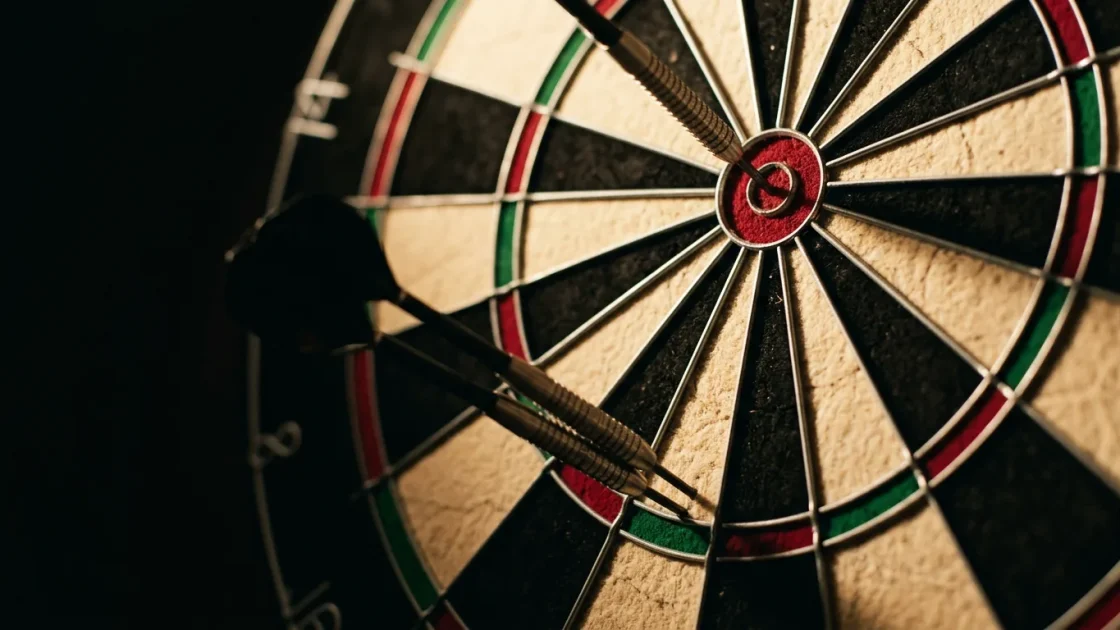
170 is the highest score you can check out from in a single three-dart visit, and there’s exactly one way to do it: treble 20, treble 20, bullseye. That’s 60, plus 60, plus 50, landing on the bull to finish. No other combination of three darts reaches 170 and ends legally.
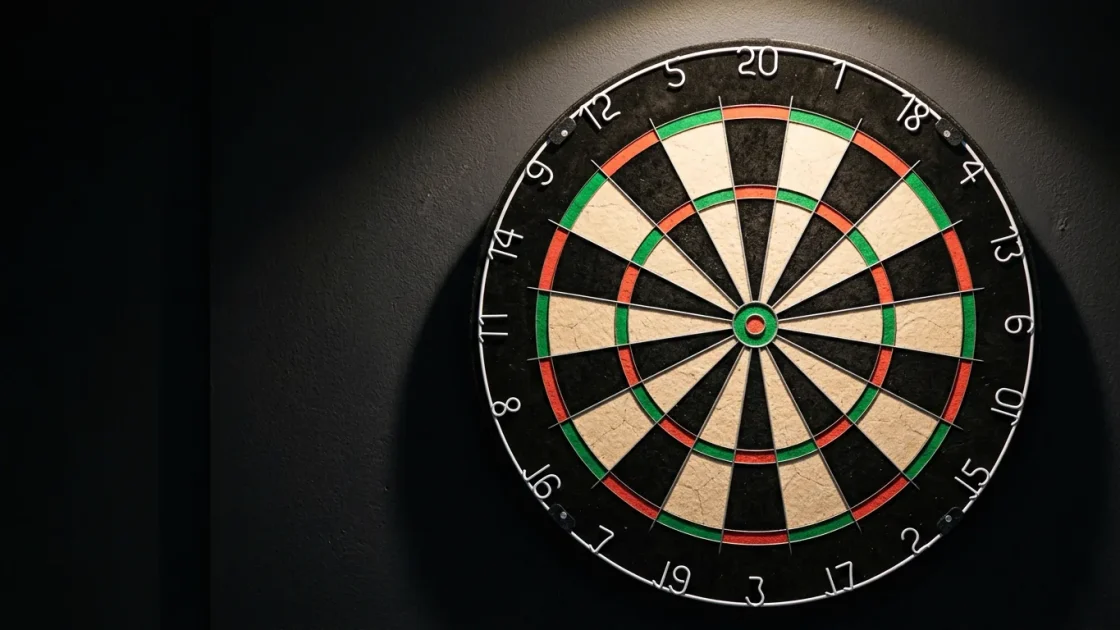
The reason the bull works as a finish is that the inner bullseye, worth 50, counts as a double. In the double-out rules of 501, your last dart has to land in a double or the bull, and the bull is the only “double” big enough to close out a score this high. Hit two maximum trebles and then the bull, and you’ve landed the highest checkout in the sport.

Why is 170 the ceiling?
Work it from the two rules that govern every finish. First, the most any single dart can score is 60, a treble 20, because 20 is the highest number and the treble ring multiplies it by three. Second, the last dart must land in a double, and the biggest double available is the bull at 50.
So the best possible visit is two darts at the maximum 60 followed by the biggest finishing double. That’s 60 plus 60 plus 50, which is 170. You physically cannot score more than 60 with any dart, and you cannot finish on anything bigger than the 50 bull, so 170 is a hard mathematical ceiling. There’s no arrangement of three darts that beats it.
KEY CONCEPT
Two limits set the ceiling: no dart scores more than 60, and no finishing double is worth more than the 50 bull. Add the two best scorers to the best finisher, 60 + 60 + 50, and 170 is what you get. Everything else about high checkouts follows from these two facts.
Why 169, 168, and 166 are impossible
Here’s the strange part. You’d expect every number below 170 to be checkable, just with different darts. But 169, 168, and 166 can’t be finished in three darts at all. They’re the first of the sport’s “bogey numbers”.
The problem is the double. To finish, your last dart lands in a double, which is always an even number. So the two darts before it must leave you an even number to shoot at. But the two highest scoring darts only reach 120 (two treble 20s), and the finishing double can be at most the 50 bull. Try to build 169, 168, or 166 from “two big darts plus a finishing double” and no combination lands exactly right. The setup darts can’t leave a double that completes the total. The number falls in a dead zone just under the maximum.

In full, seven scores can’t be checked out in three darts: 169, 168, 166, 165, 163, 162, and 159. If you’re ever left on one of these, the move is to score a dart down to a finishable number and leave the checkout for your next visit. Our 501 checkout strategy guide covers how to avoid getting stranded on them.
“The Big Fish”: the nickname and famous 170s
Somewhere along the way, 170 became “the Big Fish”, and the name stuck harder than any other piece of darts slang. The exact origin is genuinely uncertain, but most fans trace it to Sky Sports commentator Rod Studd, believed to be the first to use the phrase on air. The metaphor works on two levels: 170 is the biggest catch a leg can offer, and landing it is celebrated the way an angler celebrates the biggest fish of the day.
The finish has produced some unforgettable moments. Phil Taylor, the greatest player the sport has seen, hit a 170 against his own mentor Eric Bristow at the 1990 World Championship, the tournament where an unknown Taylor won his first world title by beating Bristow 6-1. Years later, in the 2013 Grand Slam semi-final, Adrian Lewis landed a 170 against Taylor while averaging a monstrous 110.99, though he still lost the match 16-9. A Big Fish makes the highlight reel even in defeat.
SCOUT TAKE
Watch closely and you’ll see even the best players sometimes swerve the Big Fish, taking a safer route that leaves an easier finish rather than gambling all three darts on the bull. The 170 is glamorous, but a pro is thinking about winning the leg, not the highlight clip.
How rare is a 170 checkout?
Rare, even at the top. A 170 needs three perfect darts in a row: two into the 8mm treble 20 bed and one into the 12.7mm bull, all under the pressure of a finish. Miss any of the three and the checkout is gone. Even elite professionals hit far more 180s than 170 checkouts, because a 170 demands that a maximum-level scoring visit also ends on the toughest target on the board.
That difficulty is exactly why it carries a nickname at all. A club player might land a handful in a lifetime. For the professionals it’s a genuine event, greeted with a roar, precisely because getting all three darts to behave on the game’s biggest finish almost never happens on demand.
There’s a scoring reason too. To even arrive on exactly 170, a player has to leave that precise number after their previous visits, which doesn’t happen often. Most legs are steered toward friendlier finishes in the 32-to-40 range on purpose, so being on 170 at all is partly luck of the arithmetic. Combine a rare number to land on with a rare finish to actually hit under pressure, and the Big Fish stays about as uncommon as anything in the whole sport gets.
Should you always go for the 170?
For a beginner or club player, attempting a 170 is almost always worth it, because you’re unlikely to be on it often and the practice at trebles and the bull is valuable either way. There’s little to lose: if you miss, you were probably not winning that leg in three darts anyway.
At the professional level the calculation shifts. A pro on 170 is genuinely capable of the finish, but they also weigh what a miss leaves behind. Two treble 20s followed by a missed bull can leave 50, a perfectly good next-visit finish, so the risk is often low. But if hitting the second treble is doubtful, some players will play a safer combination that keeps a comfortable double in hand rather than committing all three darts to the hardest route. It’s the same thinking that runs through all good finishing: the goal is winning the leg, not the crowd reaction.
The vocabulary around all this, from “Big Fish” to “bogey number” to “double out”, is worth learning if you’re getting into the sport. Our darts glossary collects the terms you’ll hear commentators use, so the next 170 you watch comes with the full story.
The other high checkouts worth knowing
Below the Big Fish, the next three genuine checkouts all finish on the bull too, stepping down one treble at a time. They’re worth knowing because they’re the finishes you’ll actually face from the high 160s.
| Checkout | Route | Maths |
|---|---|---|
| 170 | T20, T20, Bull | 60 + 60 + 50 |
| 167 | T20, T19, Bull | 60 + 57 + 50 |
| 164 | T20, T18, Bull | 60 + 54 + 50 |
| 161 | T20, T17, Bull | 60 + 51 + 50 |
Notice the pattern: each one keeps a treble 20 and the bull, and just walks the middle dart down through the trebles. The gaps between them, 169, 168, 166, 165, 163, 162, are the impossible ones. To see every finish mapped out, our checkout route data breaks down the numbers, and the checkout calculator gives you the route for any score on the spot.
170
the highest checkout: T20, T20, bullseye
50
the bull, the biggest finishing double, worth 50
7
bogey numbers below 170 that can’t be finished in three darts
Frequently asked questions
What is the highest checkout in darts?
170, hit as treble 20, treble 20, bullseye (60 + 60 + 50). It’s the only three-dart route to 170 and the highest possible finish in the game. No score above 170 can be checked out in a single visit.
Why is 170 the maximum checkout?
Two limits set it. No dart can score more than 60 (a treble 20), and the last dart must finish on a double, the biggest of which is the 50 bull. Two maximum trebles plus the bull make 60 + 60 + 50 = 170, and nothing can beat that.
What is a Big Fish in darts?
“Big Fish” is the nickname for the 170 checkout, the highest finish in the game. The name reflects its rarity and status as the biggest reward a single leg can offer, and is popularly credited to Sky commentator Rod Studd.
Why can’t you check out 169 in darts?
Because no three-dart combination reaches 169 and finishes on a double. The two setup darts max out at 120 and the biggest finishing double is the 50 bull, and no route leaves an even number that a double completes to exactly 169. It’s one of seven bogey numbers.
What are the checkouts just below 170?
The next possible finishes are 167 (T20, T19, bull), 164 (T20, T18, bull), and 161 (T20, T17, bull), all ending on the bull. The numbers in between, like 169, 168, and 166, cannot be finished in three darts at all.
Does the bullseye count as a double for a 170 finish?
Yes. The inner bull is worth 50 and counts as a double, so it can legally end a leg. That’s what makes 170 possible: two treble 20s leave 50, and the bull finishes it. The outer bull, worth 25, does not count as a double.
The highest checkout in darts is 170, the Big Fish, reachable only as treble 20, treble 20, bull. The ceiling is pure arithmetic: 60 plus 60 plus 50, with no dart able to score more and no double bigger than the bull. Understand that and the odd gaps below it, the impossible 169s and 168s, stop being a mystery and start being obvious. For the finishing skill behind it, read our checkout strategy guide, and check any score you like against the checkout calculator.