QUICK ANSWER
They test one variable at a time until everything clicks.
Professional darts players do not pick darts off a shelf and hope for the best. They start with their natural grip, choose a barrel shape that fits it, test weights in 1g increments, then fine-tune flights, shafts, and points over weeks or months. The process is methodical, not magical.
This guide reveals how pro players choose darts and how you can follow the same process at any level.
Watching a professional throw makes it look effortless. Three darts, tight grouping, consistent scores. But behind that consistency is a selection process that took months or years. Every pro went through a phase of testing, adjusting, and discarding before finding the setup that matched their throw.
Understanding how pro players choose darts is useful because the process itself is transferable. You do not need their talent to follow their method. TheDartScout breaks down the professional selection process into steps that any player can replicate, from complete beginner to experienced league player.
1
Grip First
Find your natural grip. It dictates barrel shape.
2
Shape Second
Match barrel shape to grip position.
3
Weight Third
Test weights in 1g increments around your baseline.
Why Does Grip Come Before Everything Else?
Every professional darts coach and equipment advisor starts with the same question: how do you hold the dart? Your grip is the interface between your hand and the equipment. It determines where on the barrel your fingers sit, how much pressure you apply, and which barrel shape allows a clean, repeatable release.
There are three broad grip categories, and how pro players choose darts begins with identifying which one they naturally use.
PLAYER FIT MATCH
Pencil grip: 2-3 fingers, light hold ✓ Straight or torpedo barrel ✓ 20-23g
Claw grip: Fingertips pressed in, firm ✓ Torpedo or scalloped barrel ✓ 22-25g
Palm grip: Multiple fingers wrapped ✓ Bomb or wide torpedo barrel ✓ 23-26g
A pencil gripper who buys a wide bomb barrel will struggle because their light, precise hold needs a slim, uniform surface. A palm gripper who buys a thin straight barrel cannot get enough contact area for a secure hold. The barrel must match the grip, not the other way around. Trying to change your grip to fit a barrel you like the look of is the single most common mistake in dart selection. For grip technique details, see dart grip styles.
How Do Pros Match Barrel Shape to Their Grip?
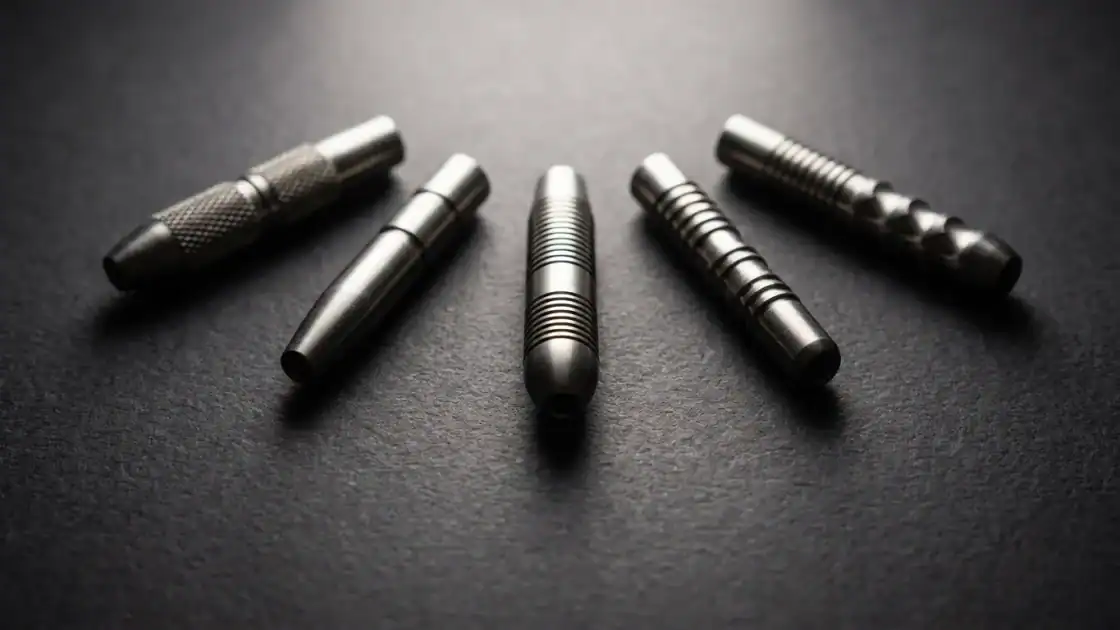
Once the grip is identified, the barrel shape follows logically. This is the second step in how pro players choose darts, and it is where the biggest physical differences between setups emerge.
Front Grip = Front-Weighted Barrel
If your fingers naturally sit on the front third of the barrel (near the point), a torpedo or front-loaded barrel puts the weight under your grip. The dart balances on your fingers rather than hanging off them. Luke Humphries, Luke Littler, and Nathan Aspinall all grip forward and use front-weighted barrels.
Rear Grip = Straight or Centre-Weighted Barrel
If your fingers naturally sit on the back third (near the shaft), a straight barrel distributes weight evenly. The dart does not tip forward when you hold it. Gerwyn Price grips further back and uses a straight barrel. Gary Anderson uses a dual-zone design that works with a mid-to-rear grip.
Professionals typically test 3-5 different barrel shapes before settling on one. They throw each shape for at least a week of practice sessions – not just a few throws. A barrel that feels wrong in the first five minutes might feel right after 500 darts. Equally, a barrel that feels great immediately might reveal problems over a longer session as fatigue changes the grip. For shape details, see dart barrel shapes.

How Do Pros Test Weight?
Weight testing is the third step and the most iterative. Professionals test in small increments – typically 0.5g or 1g at a time. A manufacturer sends a player three sets at 21g, 22g, and 23g in the same barrel shape. The player throws each weight for several sessions and tracks which produces the best grouping and the most comfortable release.
The testing is not about which weight scores highest in one session. It is about which weight feels most natural over 500+ throws. The right weight is the one where the player does not think about it. If you are consciously adjusting your throw to compensate for the dart feeling too heavy or too light, the weight is wrong.
Throw speed matters. Fast throwers (like van Gerwen) generate more velocity, which means lighter darts carry enough momentum. Slow, lobbing throwers need heavier darts to maintain a stable arc. If you throw fast and flat, start testing at 21-22g. If you throw with a higher arc and slower tempo, start at 23-24g. For weight selection, see how to choose dart weight.
Fatigue testing. Professionals also test how weight affects them over a long session. A 24g dart might feel fine for 30 minutes but cause forearm fatigue after two hours of intensive practice. The weight that works in a quick test might not work in a tournament that runs all day. Smart pros test weight over their longest typical session, not their shortest.
Weight is the variable that most players get wrong because they test too briefly. Throw 500 darts with a weight before you judge it. Anything less is a guess.
How Do Grip Texture and Surface Play Into the Decision?
After shape and weight, the grip texture is the third barrel decision. This is the most personal of all – two players with identical grip styles and throw mechanics might prefer completely different textures. How pro players choose darts at this stage is entirely by feel.
Aggressive knurl provides maximum friction. Players with dry hands or a light grip often prefer it because the rough surface compensates for low contact pressure. Gerwyn Price uses deep shark fin grooves that bite into the skin. The tradeoff is that aggressive texture can grab during release, pulling the dart sideways if the grip is not clean.
Precision rings provide consistent finger placement. The rings create a tactile reference point – your fingers sit in the same groove every time. Luke Humphries uses Red Dragon’s multi-ring grip that is evenly spaced across the barrel. This suits players who want repeatability over maximum grip force.
Smooth or light texture gives the cleanest release. Players with sweaty hands or a tight grip often prefer less texture because it allows the dart to leave the fingers without catching. Some pros apply grip wax to a smooth barrel, creating a controllable level of tack that they can adjust session by session. For grip maintenance, see how to re-grip a dart barrel.
TheDartScout recommends testing three textures: one aggressive, one moderate, one smooth. Throw 200 darts with each over separate sessions. The right texture is the one where your release feels most consistent – not the one that grips hardest.
When Do Flights and Shafts Get Decided?
After the barrel is locked in. This is an important sequence that many players get wrong. Flights and shafts should be tuned to the barrel, not chosen independently. A barrel with a forward centre of gravity needs less flight drag than a barrel with a centred balance point. Choosing flights before barrels means you might pick the wrong flight size for the barrel you end up with.
THE PROFESSIONAL SEQUENCE
Grip. Shape. Weight. Texture. Shaft. Flight. Point.
This is the order professionals follow. Each step depends on the previous one. Changing the order means optimising a component for a barrel you might not keep. Fix the barrel first, then tune everything else to match it.
Shaft length is tested next. Start with medium (the default). If the dart flies too high and arcs too much, try short. If it flies too flat and drops before the board, try long. Then flight shape – standard for maximum stability, slim for minimum drag. The combination of shaft length and flight shape controls the dart’s aerodynamic profile. For the science, see how flights and shafts affect your throw.
Point length is the final adjustment. Start with 32mm. If darts land tail-up, try 36mm. If grouping is tight and darts block each other, try 41mm for more clearance. This is fine-tuning, not a major change. For point options, see dart point types.
How Do Sponsor Relationships Affect the Choice?
Every top PDC player has a dart manufacturer sponsorship. This means they throw that brand’s products and have a signature model produced under their name. But the relationship is not as restrictive as it might seem.
When a player signs with a manufacturer, the manufacturer’s product development team works with them to create a barrel that matches their specifications. The player describes their grip, preferred weight, and shape preferences. The manufacturer produces multiple prototypes. The player tests them and provides feedback. This cycle repeats until both sides are happy.
The player is not forced to use a barrel they do not like. The sponsor relationship is collaborative – the manufacturer wants the player to perform well because it sells darts. A player throwing badly with uncomfortable darts is bad for everyone. In practice, the signature model genuinely reflects the player’s preferences because the manufacturer has a financial incentive to get it right.
This means that when you buy a Luke Littler signature dart, the barrel shape, weight, grip pattern, and point system are what Littler actually chose after testing dozens of options. The specification is authentic, not a marketing exercise. For current player setups, see what darts do pros use in 2026.
How Can You Follow the Same Process?
You do not have a manufacturer sending you free prototypes. But you can follow the same method with a few practical adjustments.
Step 1: Identify your grip. Hold a pen or pencil as if you were throwing it at a target. Note where your fingers sit and how many fingers you use. That is your natural grip. It will not change much with practice – it is biomechanical, not learned. See dart grip styles to classify yours.
Step 2: Try barrels in a shop. Many dart retailers have try-before-you-buy stations. Hold different barrel shapes without throwing them. Find 2-3 shapes that feel comfortable in your grip. Do not buy yet.
Step 3: Buy one set and commit. Choose one barrel in your grip-matched shape at 22-23g (the centre of the pro range). Throw it for a full month. Do not change anything for 30 days. This baseline gives you data to compare against.
Step 4: Adjust one variable. After the baseline month, change one thing. Try a 1g heavier barrel. Or try a different shaft length. Or swap the flight shape. Change ONE variable, throw for a week, and compare to your baseline. This is exactly how pro players choose darts – single-variable testing over time.
Step 5: Settle and practise. Once each component feels right, stop changing. The biggest improvement comes from practice with consistent equipment, not from endlessly searching for the perfect dart. For practice routines, see how to practice darts alone and consistent dart throw.
KEY TAKEAWAY
The professional selection process takes months. Yours should take at least a month. Rushing the decision means you settle on equipment that does not match your throw, and you spend years compensating instead of improving.
How Do Pros Decide Between Similar Setups?
After narrowing to 2-3 barrel options that all feel good, pros use competitive testing to pick the winner. This means playing actual game formats – 501 legs, cricket, and checkout practice – under match-like pressure. The barrel that produces the best results under pressure wins, even if a different barrel felt slightly better during relaxed practice.
This is an important distinction. Practice throwing is low-pressure, repetitive, and focused on one segment (usually treble 20). Competition throwing involves scoring under pressure, finishing on doubles, switching targets, and coping with fatigue and nerves. A barrel that groups well on treble 20 in practice might feel different when you are finishing a leg under pressure and need to hit double 16. According to PDC competition data, checkout percentage varies more between setups than scoring average, which suggests that the finishing feel of a barrel matters more than the scoring feel.
Pros also test against different opponents. A barrel that works well when you are throwing first (and feeling confident) might not work as well when you are throwing second (and feeling pressure from your opponent’s scoring). The best setup is the one that performs consistently regardless of match situation.
What Role Does the Dartboard Play in Equipment Selection?
Pros practise and compete on the same board type: premium blade-wire bristle boards (typically the Winmau Blade 6 for PDC events). This means their equipment choices are optimised for sisal fibre and thin blade wire. Point length, point texture, and even barrel diameter are tuned for this specific surface.
If you practise on a budget round-wire board but compete on a blade-wire board, your equipment choices may not transfer well. The bounce-out rate is different, the feel of the dart entering the board is different, and the scoring feedback is different. How pro players choose darts includes choosing the board they practise on. For board selection, see how to choose a dartboard. For the bristle vs electronic comparison, see electronic vs bristle dartboard.
How Important Is Consistency vs Experimentation?
This is the paradox of dart selection. You need to experiment to find the right setup, but you need to commit to a setup to improve. Pros resolve this by having a dedicated testing phase and a competition phase.
During the testing phase (typically pre-season or during a form break), they try new components freely. This might last 2-4 weeks. During the competition phase, they lock in their setup and do not change anything. No new barrels, no different weights, no shaft experiments. The dart becomes an extension of the body, and changing it during competition is like changing your grip on a tennis racket mid-match – it disrupts muscle memory.
For club and league players, the same principle applies. Give yourself a testing window (perhaps the first month of a new season or during the off-season). Experiment freely during that period. Then commit to your setup for the rest of the season. When you stop changing equipment, your throw stabilises because the only variable left is your technique. And technique is what actually wins matches.
Phil Taylor, the most decorated player in darts history, used the same basic barrel design for over 15 years. His technique evolved, his fitness changed, his mental game improved. But his darts stayed the same. That is not a coincidence. The best players improve themselves, not their equipment. How pro players choose darts is important, but it is the first step of the journey, not the last.
What Are the Most Common Selection Mistakes?
Buying based on looks. A dart that looks impressive in the box might not suit your grip. Cosmetic coatings (PVD, titanium nitride) change the surface feel. A beautiful barrel that slips in your fingers is useless. Always prioritise feel over appearance.
Copying a pro without matching the grip. Buying Luke Littler’s darts because he wins tournaments only works if your grip and throw match his. If they do not, his darts will fight your technique. Use pro setups as a guide for specifications (weight range, tungsten percentage), not as a prescription for exact models.
Changing too many things at once. If you switch barrel shape, weight, shaft length, and flight shape simultaneously, you have no idea which change helped and which hurt. The professional method is one change at a time, tested over multiple sessions.
Not testing long enough. A new dart feels unfamiliar for the first 100 throws. Judge it after 500. Some of the best setups feel slightly wrong initially because they are different from what you are used to, not because they are actually wrong for your throw.
Ignoring fatigue. A dart that feels great for 20 minutes might cause wrist or forearm fatigue over two hours. Test equipment over your longest typical session, not your shortest warm-up.
SCOUT’S TAKE
The best dart in the world is the one that disappears in your hand. You pick it up, grip it naturally, throw without thinking about the equipment, and focus entirely on the target. That is what how pro players choose darts ultimately comes down to. Not specs. Not brands. Not what someone else throws. The dart that becomes invisible because it matches your throw so perfectly that you forget you are holding it.
Frequently Asked Questions
How long does the selection process take for a professional?
Typically 3-12 months from first prototype to final specification. Some players find their setup quickly (within a few weeks of testing). Others take over a year of incremental adjustments. The timeline depends on how specific the player’s requirements are and how much the manufacturer needs to iterate on prototypes.
Do pros ever change their darts after finding their setup?
Rarely for the barrel. They change flights every few days, shafts every few weeks, and occasionally adjust point length. But the barrel – the core component – stays the same for years in most cases. Major changes usually happen when a player signs with a new sponsor and needs to adapt to a different manufacturer’s barrel options.
Can I follow this process with budget darts?
Yes. The process works with any equipment. Start with a £20-30 (~$25-40) set of 90% tungsten darts at 22-23g. The selection method is about finding what suits YOUR throw, not about buying expensive equipment. A £25 (~$32) Designa barrel tested properly will serve you better than a £70 (~$90) signature model bought without testing. For the full component breakdown, see anatomy of a dart.
How many darts should I test before deciding?
At minimum, try three different barrel shapes in your weight range. If you can access a try-before-you-buy station at a dart shop, test as many as you can in a single visit. If buying online, choose three different shapes from a retailer with a returns policy. The goal is to find 1-2 shapes that feel comfortable, then test weight variations within those shapes. Most players settle within 3-5 barrels tested. Pros test more, but they also have manufacturer support. For most players, three is enough to identify a strong match.
Does the dart brand matter?
Less than you think. At the same tungsten percentage and weight, barrels from different brands perform very similarly. The main differences between brands are in grip pattern design, cosmetic finish, and point systems. Target, Winmau, Red Dragon, Unicorn, and Harrows all make excellent 90% tungsten barrels. The brand name on the barrel does not affect its flight characteristics. Buy the shape and weight that suits your grip, regardless of which logo is stamped on it.
How do I know when I have found the right darts?
You stop thinking about your equipment. The dart sits in your hand naturally. Your fingers find the same position without looking. The release feels clean and effortless. You focus on the target, not on the object in your hand. This is the state every professional reaches with their chosen setup. It does not happen immediately – it takes weeks of practice with the same darts. But when it arrives, you know. That is the feeling you are chasing, and it is the ultimate answer to how pro players choose darts.
What is the single most important factor in how pro players choose darts?
Grip compatibility. Everything else – weight, shape, flights, shafts – can be adjusted. But if the barrel does not fit your grip, no amount of adjustment will make it work. This is why pros start with grip analysis before touching a single barrel. Start there yourself.
For current pro setups, see what darts do pros use in 2026. For weight selection, read how to choose dart weight. For barrel shapes, see dart barrel shapes. For grip technique, read dart grip styles. For every component explained, see anatomy of a dart. Take the dart recommendation quiz for a personalised match.