QUICK ANSWER
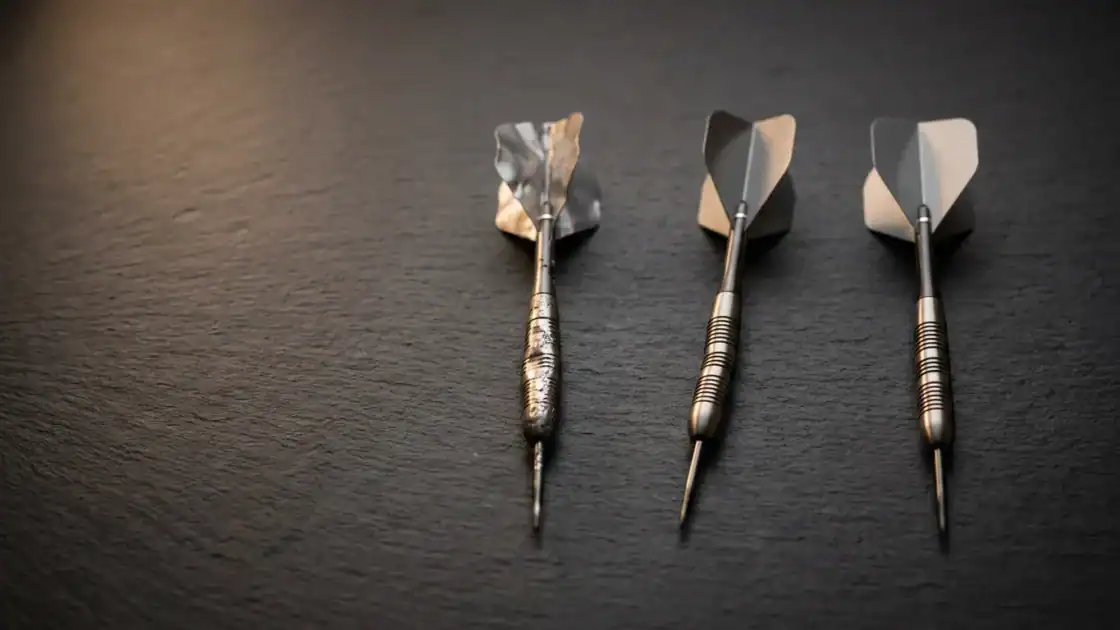
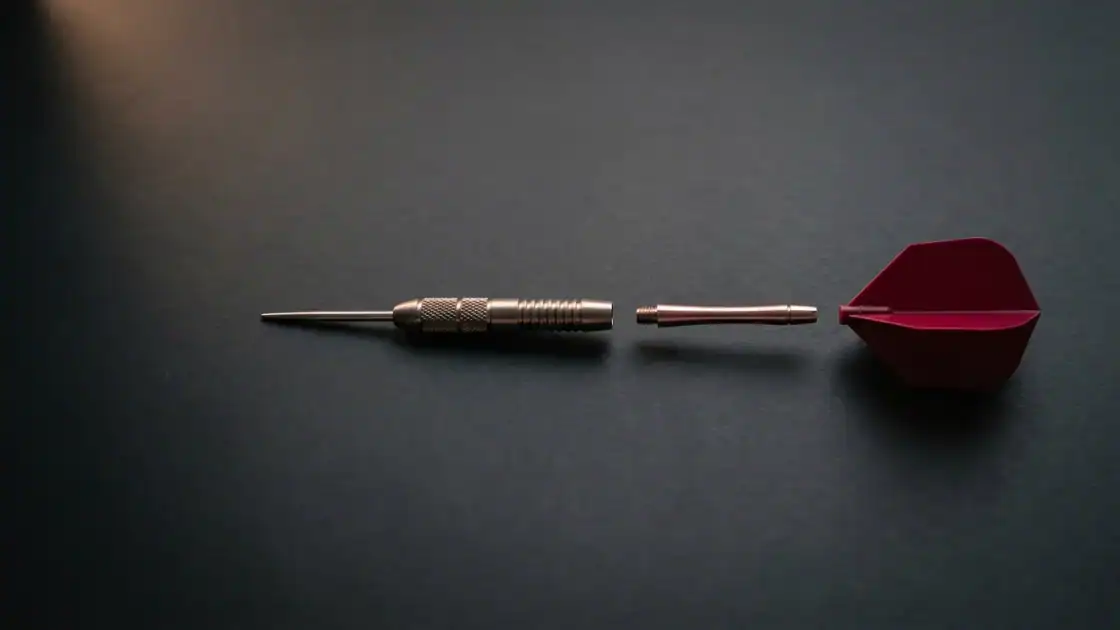
A dart has four components: point, barrel, shaft, and flight.
The point sticks into the board. The barrel is where you grip and where most of the weight sits. The shaft connects the barrel to the flight. The flight stabilises the dart in the air.
This guide explains what each part does, how they interact, and how your choices affect the way a dart flies.
Understanding the anatomy of a dart helps you make better equipment decisions. Every component affects weight, balance, and flight path. Change one part and the whole system shifts. A heavier barrel with a slim flight behaves differently from a light barrel with a standard flight, even if the total weight is the same.
This guide covers all four components in detail. TheDartScout breaks down the materials, measurements, and design choices so you can see how the parts work together rather than treating them as four separate purchases. If you are new to darts, start here. If you already play, this will help you understand why your current setup behaves the way it does.
What Are the Four Parts of a Dart?
Every dart, from a budget brass set to a professional tungsten setup, has the same four components assembled in the same order from front to back: point, barrel, shaft, flight. The point screws or is fixed into the front of the barrel. The shaft screws into the back of the barrel. The flight slots or clips into the end of the shaft. The total assembly must not exceed 300mm in length or 50g in weight under competition rules.
Most darts weigh between 18g and 26g. The typical overall length is 127-178mm (5-7 inches). Within those boundaries, the proportions vary enormously depending on the player’s grip, throw, and preferences. Two darts that weigh exactly 24g can feel completely different because of how that weight is distributed across the four components.

What Does the Point Do?
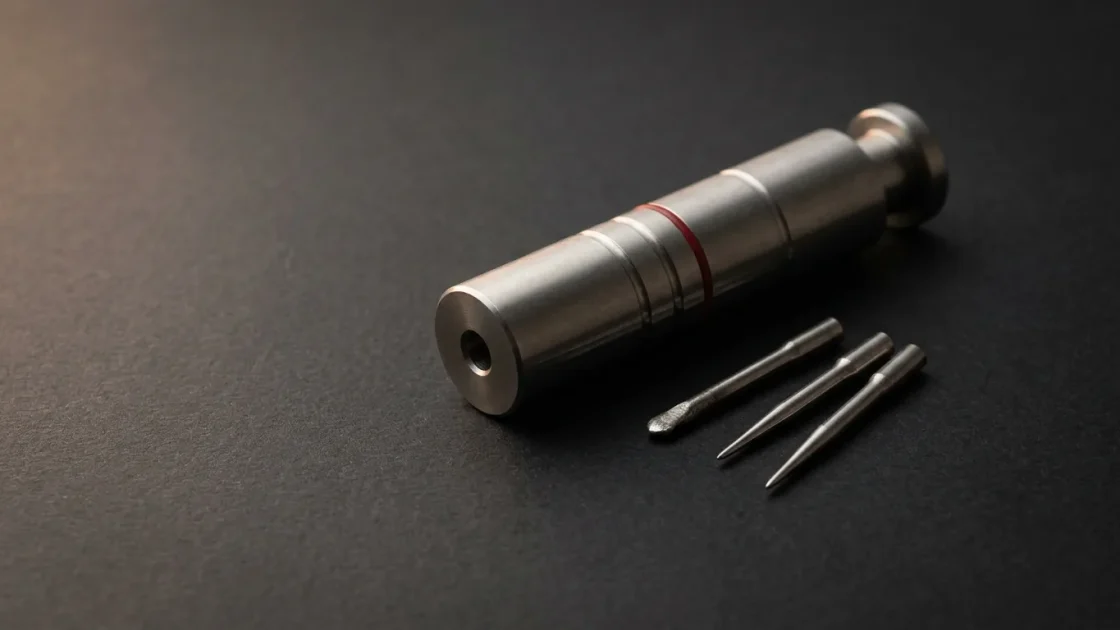
The point (also called the tip) is the front end of the dart. Its job is to penetrate the dartboard and hold the dart in place. Points come in two types: steel tips for bristle boards and soft tips (plastic/nylon) for electronic boards.
Steel tip points
Steel points are solid metal, typically 32mm or 41mm long. The shorter 32mm length is the standard included with most darts. Longer 41mm points shift the centre of gravity forward slightly and can help darts that tend to land tail-heavy sit flatter in the board.
The tip shape matters. A slightly rounded point slides past the board’s blade wires and into the sisal fibres. A needle-sharp point digs into the wire and causes bounce-outs. A blunt point cannot penetrate cleanly and falls out. Most manufacturers ship points with a gentle radius that works well out of the box. Over time, points wear and need reshaping with a sharpener or fine sandpaper. For more on this, see our guide on why darts bounce out.
Fixed vs moveable points
Fixed points are permanently set into the barrel. They are simple and reliable. Moveable point systems (like the Winmau Trident or Target Storm) use a spring-loaded tip that retracts slightly on impact. When the point hits a blade wire, the spring absorbs the force and the dart continues forward into the sisal beside the wire. This reduces bounce-outs noticeably on boards with thicker wire systems.
Soft tip points are made from nylon or plastic and are designed to stick into the small holes on electronic dartboards. They break more often than steel points and are sold in bulk packs as consumables. Soft tip darts are typically lighter (16-20g) because electronic boards cannot handle the impact of heavier darts.
How Does the Barrel Affect Your Throw?
The barrel is the most important component. It is where you grip the dart, and it contains most of the dart’s weight. Barrel choices affect how the dart feels in your hand, how it flies through the air, and how tightly you can group your darts on the board.
Materials and density
Three materials dominate the modern market. Brass is the cheapest. It is dense enough for a functional dart but produces thick barrels because brass is less dense than the alternatives. A 24g brass barrel might be 8-9mm in diameter. Nickel-silver sits in the middle – denser than brass, thinner barrels, moderate price. Tungsten is the standard for serious players. Its high density means a 24g tungsten barrel can be as thin as 6.35mm in diameter, leaving more room on the board for tight grouping.
Tungsten barrels are sold by percentage. 80% tungsten (with 20% nickel or iron binder) is the entry point for tungsten darts. 90% is the sweet spot for most players – thin enough for tight grouping, durable enough to last years. 95% and 97% are thinner still but cost more and can be more brittle. For a full breakdown, see our tungsten percentage comparison.
Shape and centre of gravity
Barrel shape determines where the weight sits along the dart’s length. This is called the centre of gravity (CoG), and it affects how the dart flies and lands.
Straight barrels have a uniform diameter from front to back. The weight is evenly distributed, putting the CoG near the middle. These suit players with a pencil grip who hold the dart lightly between two or three fingers.
Torpedo barrels are wider in the front third and taper toward the back. This pushes the CoG forward, which helps the dart fly point-first with less wobble. Most professionals use some variation of a front-loaded barrel.
Bomb barrels are short and fat, with the bulk of the weight concentrated in a small area. The CoG is far forward. These suit players with a palm grip who wrap several fingers around the barrel. The tradeoff is a thicker profile that takes up more space on the board.
Typical barrel dimensions are 46-53mm long and 6.35-7.11mm in diameter for tungsten. Brass barrels run wider. For detailed shape comparisons, see our barrel shapes guide.

Grip patterns
The barrel surface is machined with grip patterns that help your fingers hold the dart consistently. The main types are ringed grooves (shallow horizontal rings), knurled texture (a crosshatch pattern that feels rough), micro-grooves (very fine, closely spaced rings), and smooth sections (no texture at all).
Aggressive grip (deep knurl) gives maximum hold but can cause the dart to stick to your fingers on release, pulling it off line. Light grip (shallow rings or smooth) gives a cleaner release but less control during the hold phase. Most players end up somewhere in the middle. Your grip preference is personal – there is no objectively best pattern. For how grip interacts with technique, see dart grip styles.
What Does the Shaft Do and Why Does Length Matter?
The shaft (also called the stem) connects the barrel to the flight. It screws into the back of the barrel using a standard thread. The shaft’s length determines how far the flight sits from the barrel, which affects the dart’s stability and arc in flight.
Length options
Shafts come in five standard lengths: Extra Short, Short, Tweenie (in-between), Medium, and Long. A longer shaft moves the flight further from the barrel, increasing the lever effect of the flight and making the dart more stable. This suits players with a slower, lobbier throw. A shorter shaft reduces the flight’s influence, making the dart more responsive to the throw but less forgiving of imperfect technique. Fast, flat throwers often prefer short shafts.
Materials
Nylon is the most common material. It is cheap, light, and comes in every colour. Nylon shafts flex slightly on impact, which absorbs energy and reduces breakage. The downside is they snap after heavy use.
Aluminium shafts are more rigid and durable. They add a small amount of weight toward the rear of the dart, which can stabilise a front-heavy barrel. They bend rather than snap on impact, which means they can be straightened and reused.
Carbon fibre and titanium shafts are premium options. They combine the rigidity of aluminium with the light weight of nylon. They are expensive but last much longer than either alternative.
Threads and compatibility
The standard thread size worldwide is 2BA. This is the thread you will find on the vast majority of barrels and shafts from brands like Winmau, Unicorn, Target, Harrows, and Red Dragon. If you buy a barrel and a shaft from different brands, they will almost certainly fit together if both use 2BA threading.
The alternative is No.5 threading, used primarily by Japanese brands like L-style and some Fit Flight systems. No.5 threads are slightly smaller than 2BA and the two are not interchangeable. If you want to use L-style shafts, you need a barrel with No.5 threading or an adapter ring.
KEY TAKEAWAY
If you are buying components separately, check the thread size. 2BA fits 95% of barrels. No.5 is the exception, not the rule. When in doubt, 2BA is safe.
Why do shafts come loose?
Shafts loosen because the repeated impact of hitting the board vibrates the threaded connection. A rubber O-ring between the shaft and barrel creates friction that resists this loosening. Most shafts include an O-ring in the pack. If yours did not, they cost pence and are worth adding. Without one, you will spend half your practice session tightening shafts between throws.
Spinning shaft systems (like Target’s rotating tops) allow the flight to spin freely when hit by an incoming dart. This reduces deflection and flight damage. The shaft itself stays fixed in the barrel – only the top section rotates. For a deeper look at shaft options, see our shaft selection guide.
How Do Flights Keep the Dart Stable?
The flight is the fin at the back of the dart. It creates drag, which keeps the rear of the dart behind the front as it travels toward the board. Without a flight, a dart would tumble. The flight’s size and shape determine how much drag it produces, which affects the dart’s speed, arc, and forgiveness.
Shapes
Standard flights are the largest common shape – roughly 40mm wide. They produce the most drag, slowing the dart and creating a higher arc. This makes them forgiving for beginners because the extra stability compensates for inconsistent releases.
Slim flights are narrower and produce less drag. The dart travels faster and flatter. This suits experienced players with a consistent, direct throw. Less drag also means less air resistance, so the dart is more affected by the throw itself rather than being corrected by the flight.
Pear and kite shapes sit between standard and slim. They offer moderate drag with a slightly different profile. Many players try several shapes before settling on one. For the full comparison, see our flight selection guide.
Thickness
Flights come in different thicknesses measured in microns. 75 micron flights are thin and flexible – they fold flat easily for storage and are cheap to replace. 100 micron is the standard thickness. 150 micron flights are rigid, hold their shape longer, and resist damage from incoming darts. Thicker flights produce slightly more consistent drag because they do not flex in the air. The tradeoff is that they cost more and can cause more deflection when a following dart hits them.
How Do the Four Components Work Together?
Understanding the full anatomy of a dart means seeing it as a system, not four independent choices. Each component affects the others. Here is how the system works.
Weight distribution and flight size are linked. A front-heavy barrel (torpedo or bomb shape) needs less flight drag to stay stable because the weight already pulls the point forward. A rear-heavy or evenly balanced barrel (straight shape) needs more flight area to compensate. Pairing a front-heavy barrel with a large standard flight can over-stabilise the dart, making it arc too high. Pairing a straight barrel with a slim flight can leave it under-stabilised, causing wobble. According to TheDartScout’s equipment testing, the most common pairing among intermediate players is a torpedo barrel with a standard or pear flight.
Shaft length and flight size interact. A long shaft amplifies the flight’s effect because it moves the flight further from the centre of gravity. A short shaft reduces it. If you switch from a standard flight to a slim flight, you might want a slightly longer shaft to compensate for the reduced drag. If you switch to a larger flight, a shorter shaft keeps the overall balance similar.
Point length shifts the balance point. Moving from a 32mm point to a 41mm point shifts roughly 1-2g of weight forward. On a light dart (18-20g) this is noticeable. On a heavy dart (24-26g) it is subtle but still measurable. If your darts land tail-up in the board, a longer point can help them sit flatter.
SCOUT’S TAKE
Most beginners buy a complete dart set and never think about the components. That is fine for your first few months. But once you have a consistent throw, swapping one component at a time – a different shaft length, a different flight shape – teaches you more about your game than any coaching video. Change one thing. Throw 100 darts. See what happens.
Frequently Asked Questions
Can I mix components from different brands?
Yes, as long as the thread size matches. The standard 2BA thread is used by Winmau, Unicorn, Target, Harrows, Red Dragon, Designa, and most other major brands. Any 2BA shaft fits any 2BA barrel. Flights are universal – they slot into any shaft regardless of brand. The only exception is No.5 threading used by L-style and some Japanese systems, which requires matching components or an adapter.
What is the best material for a barrel?
Tungsten at 90% composition is the best value for most players. It produces a thin barrel that allows tight grouping without the premium price of 95% or 97%. Brass is fine for casual play but produces thick barrels that crowd the board. For a full material comparison, see our tungsten vs brass guide.
How heavy should my darts be?
Most players settle between 21g and 25g. Lighter darts (18-20g) need a faster throw and more precise technique. Heavier darts (24-26g) carry more momentum and are more forgiving. Competition rules from the PDC allow up to 50g but nobody throws that heavy. See our weight guide for recommendations by skill level.
How often should I replace flights and shafts?
Flights should be replaced when they are torn, creased, or no longer hold their shape. For regular players, that is every 1-4 weeks depending on how often incoming darts hit them. Nylon shafts last 2-8 weeks. Aluminium and carbon fibre shafts last months or years. Points rarely need replacing – just reshaping with a sharpener every few weeks.
Do soft tip and steel tip darts use the same components?
The anatomy of a dart is the same for both types. The barrels, shafts, and flights are interchangeable. The only difference is the point. Steel tip darts have a fixed or removable metal point. Soft tip darts have a screw-in plastic tip. Many barrels accept both point types via a conversion kit, so you can switch between bristle and electronic boards with the same barrel. For the full comparison, see steel tip vs soft tip.
For definitions of every term used above, browse the darts glossary. For equipment choices, read our guides on dart weight, barrel shapes, flights, and shafts. To keep your barrels in top condition, read how to clean tungsten darts. To understand how flights and shafts work together in flight, see how flights and shafts affect your throw. For point options and maintenance, see dart point types. New to darts? Start with the beginner’s guide or take the dart recommendation quiz.