QUICK ANSWER
Get a bristle board, 22–24g tungsten darts, and learn 501.
That is genuinely all you need. A bristle dartboard costs £30–50 (~$40–65), a decent set of 80% tungsten darts runs £20–30 (~$25–40), and 501 is the game every tournament on earth uses. Hang the board with the bullseye at 1.73 m, stand 2.37 m back, and throw. This guide covers everything from there – equipment choices, scoring, technique, rules, practice structure, and the mistakes that slow beginners down.
Darts is one of the simplest sports to start and one of the hardest to master. The barrier to entry is almost nothing – a board, three darts, and a wall – but the skill ceiling is so high that professionals spend decades refining their throw. That contrast is exactly what makes it compelling.
This beginner’s guide to darts covers every question a new player asks in their first few months. Consider it your beginner’s guide to darts in one page. It is designed as a starting point: each section gives you enough to understand the topic and links to a deeper guide if you want the full picture. Setting up a board at home for the first time? Trying to understand what you just watched on television? Start here.
What Equipment Do You Need to Start Playing Darts?
You need exactly two things: a dartboard and a set of darts. Everything else – surrounds, mats, lighting – is helpful but optional. Here is what matters when choosing each.
Dartboard
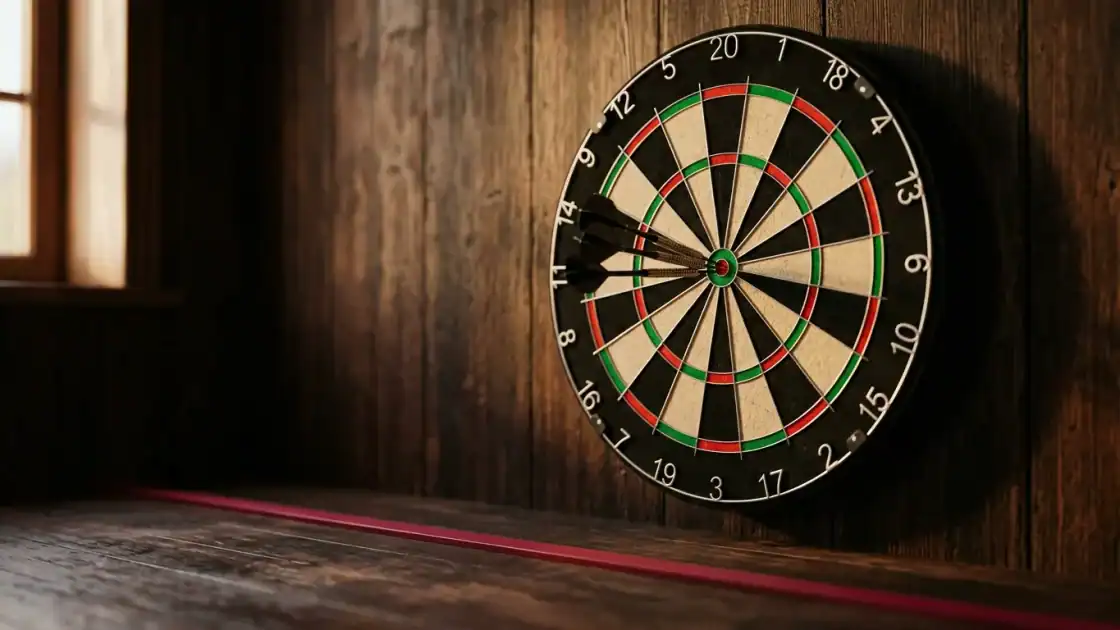
Buy a bristle dartboard made from compressed sisal fibres. Sisal is self-healing – the fibres close behind the dart when you pull it out, so the board lasts years instead of weeks. Electronic boards with soft-tip darts exist, but bristle boards are what every league, pub, and tournament uses. For ranked picks, see best dartboard for home. A solid bristle board costs £30–50 (~$40–65). For a detailed comparison, read our guide on how to choose a dartboard. If you are wondering about the differences between board types, see steel tip vs soft tip darts.
Darts
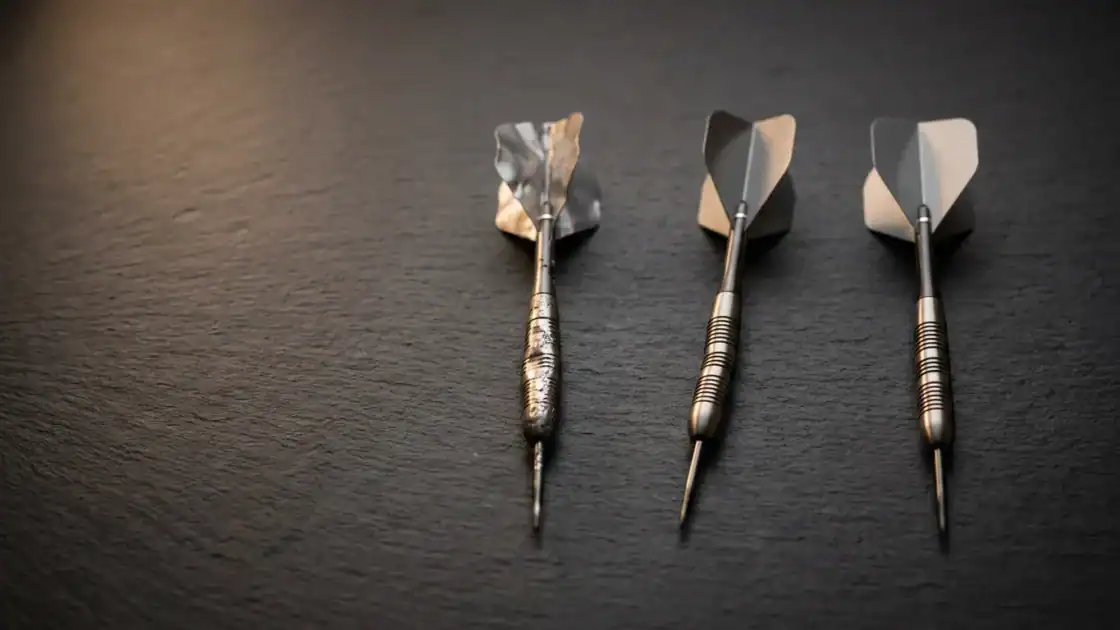
Start with 22–24 g darts made from 80% tungsten. Tungsten is denser than brass, which means the barrel can be slimmer at the same weight – giving you tighter grouping potential. At 80% tungsten, you get that advantage without paying premium prices. A beginner set runs £20–30 (~$25–40). For our top picks, see the best darts for beginners roundup. For the full breakdown of why weight matters, read how to choose dart weight. To understand the material trade-offs, see tungsten vs brass darts and 80% vs 90% vs 95% tungsten.
Anatomy of a Dart

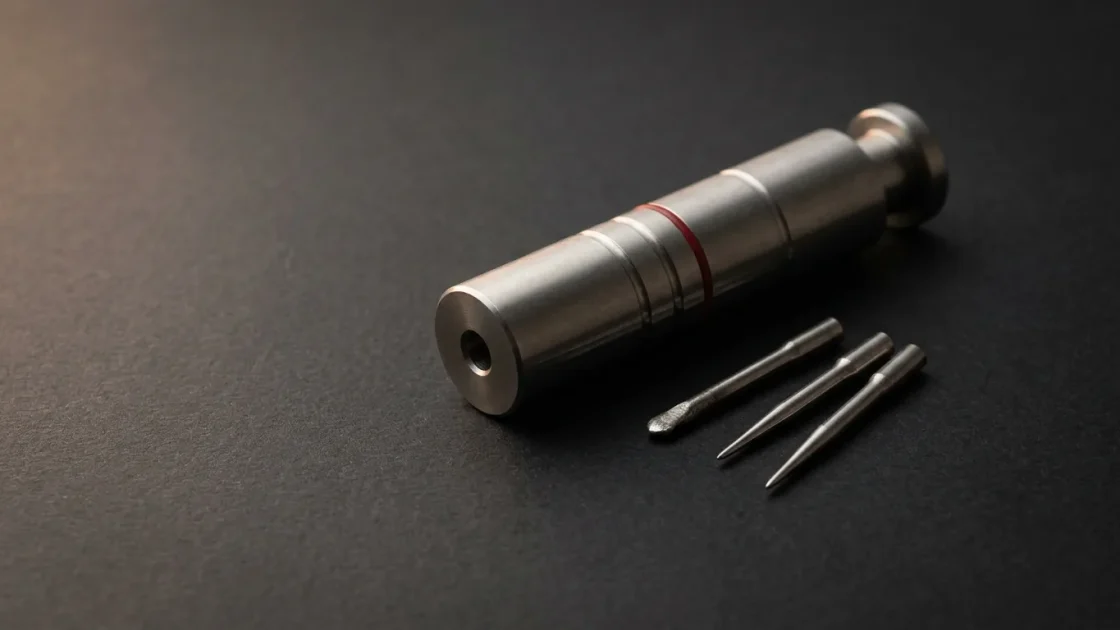
Every dart has four parts. The point (or tip) is the steel needle that sticks into the board. The barrel is the main body you grip – it comes in different shapes, weights, and grip patterns. The shaft (or stem) connects the barrel to the flight. The flight is the set of four fins at the back that stabilise the dart in the air. Each part affects how the dart flies and how it feels in your hand.
You do not need to optimise every component on day one. Start with whatever comes in the box, then swap one part at a time as you develop preferences. For deep dives: barrel shapes explained, how to choose flights, how to choose shafts, and how flights and shafts affect your throw.
KEY TAKEAWAY
Do not overthink equipment as a beginner. A £50–80 (~$65–100) total investment – board plus darts – is enough to play at a level where technique, not gear, is the limiting factor. Upgrade individual components once you know what you want to change.
How Do You Set Up a Dartboard Correctly?
There are two measurements that matter. The bullseye must be exactly 1.73 m (5 ft 8 in) from the floor. The oche – the line you stand behind to throw – must be 2.37 m (7 ft 9.25 in) from the face of the board. These are the official dimensions used by the PDC, WDF, and every sanctioned competition worldwide.
| Measurement | Metric | Imperial |
|---|---|---|
| Bullseye height (floor to centre) | 1.73 m | 5 ft 8 in |
| Throwing distance (board face to oche) | 2.37 m | 7 ft 9.25 in |
| Diagonal (bullseye to oche) | 2.93 m | 9 ft 7.5 in |
| Wheelchair bullseye height | 1.37 m | 4 ft 6 in |
The diagonal measurement is useful if your floor is uneven – measure from the bullseye to the front of the oche at 2.93 m and both other measurements will be correct automatically. Mount the board on a wall that can handle stray darts (beginners miss a lot), and make sure nobody can walk behind the throwing line while darts are in play.
For the complete mounting walkthrough – wall types, bracket options, lighting, and surround boards – read how to set up a dartboard.
How Does Dartboard Scoring Work?
The dartboard is divided into 20 numbered segments arranged in a non-sequential pattern designed to punish inaccuracy. Each segment has four scoring zones: two single areas, a double ring on the outer edge, and a treble ring roughly halfway between the outer edge and the bullseye. The centre has an outer bull (25 points) and an inner bull or bullseye (50 points).
| Zone | How to Identify It | Score | Example (segment 20) |
|---|---|---|---|
| Large single | Wide area between treble and double | 1× face value | 20 |
| Thin single | Narrow area between treble and bull | 1× face value | 20 |
| Double ring | Narrow outer ring | 2× face value | D20 = 40 |
| Treble ring | Narrow inner ring | 3× face value | T20 = 60 |
| Outer bull | Green ring at centre | 25 | – |
| Inner bull (bullseye) | Red circle at centre | 50 | – |
The maximum score with a single dart is 60 (treble 20). The maximum score in one turn of three darts is 180 – three treble twenties. You will hear commentators call this simply “a maximum.” The highest possible checkout – the score you can finish a leg from – is 170, achieved with two treble twenties and a double bullseye.
TheDartScout’s analysis of 162 checkout routes shows that target selection matters more than raw accuracy. Knowing when to leave treble 20 alone is what separates improving players from stuck ones.
What Are the Basic Rules of 501?
501 is the standard game in professional and competitive darts. Both players start at 501 points. Each turn, you throw three darts and subtract your total score from your remaining points. The first player to reach exactly zero wins the leg – but the final dart must land in a double or the inner bullseye.
The Double-Out Rule
This is the rule that confuses new players most. You cannot just throw your remaining score – the last dart must hit a double. If you have 32 remaining, you must hit double 16. If you have 40 remaining, you must hit double 20. If you score more than your remaining total, or reduce it to 1 (which has no double), your turn is void and your score resets to what it was before you threw.
This is called “busting.” It is frustrating but fundamental. The entire strategy of 501 revolves around leaving yourself on a number you can finish with a double. Our checkout calculator shows you the optimal route for every score from 170 down to 2.
Other Games Worth Knowing
301: Identical to 501 but starting at 301. Shorter legs, faster games. Sometimes played with a double-in rule (your first scoring dart must also be a double).
Around the Clock: Hit the numbers 1 through 20 in order, then the bullseye. Three darts per turn. No doubles or trebles required. This is the best game for beginners because it forces you to aim at every part of the board.
Cricket: Close numbers 15 through 20 and the bullseye by hitting each three times. Popular in the US and Asia. More strategic than 501 because you can score on numbers your opponent has not closed.
SCOUT’S TAKE
Start with Around the Clock for your first week or two. It teaches you where every number lives on the board without the pressure of arithmetic. Move to 301 once you can consistently hit single numbers, then graduate to 501 when you want to learn checkouts. Jumping straight to 501 as a raw beginner just means you spend most of your time doing maths instead of throwing.
How Do You Throw a Dart Properly?
Throwing a dart well comes down to three things: a stable stance, a consistent grip, and a smooth release. You do not need power – darts weigh less than 30 grams and the board is only 2.37 metres away. Accuracy comes from repeating the same motion every time, not from throwing harder.
Stance
Place your dominant foot forward, touching or just behind the oche. Angle your body roughly 45 degrees toward the board. Keep most of your weight on your front foot. Your back foot is for balance only – it should barely carry load. Do not lean over the oche, and do not stand completely square to the board.
Grip
Hold the barrel with at least two fingers and your thumb. The most common beginner grip uses three fingers (thumb, index, and middle finger). Grip firmly enough that the dart does not slip, but loosely enough that you can release cleanly. If your fingers feel white or tense, you are gripping too hard.
There is no single correct grip – professionals use everything from two-finger pencil grips to five-finger wraps. The key is that your grip allows a clean, consistent release every time. For all the variations, see our dart grip styles guide.
The Throw
Raise the dart to eye level. Your elbow should be at roughly 90 degrees, pointing at the board. The throwing motion comes from your forearm and wrist – your upper arm and shoulder should stay almost completely still. Accelerate smoothly through the release point and follow through with your hand pointing at the target.
The most common beginner mistake is pulling the dart back like a javelin and using your shoulder. This adds power you do not need and destroys consistency. Think of it as tossing a paper aeroplane, not throwing a ball.
KEY TAKEAWAY
Your elbow is the hinge. Everything above it stays still, everything below it moves. If you remember one thing about throwing technique, remember that. The dart should feel like it leaves your hand at the top of a natural arc, not like you forced it out.
What Practice Routine Should a Beginner Follow?
The biggest difference between players who improve and players who plateau after a month is structured practice. Throwing aimlessly at treble 20 for an hour is not practice – it is just throwing. Here is a progression that builds skills in the right order.
| Stage | Timeframe | Focus | Game or Drill |
|---|---|---|---|
| 1 | Week 1–2 | Consistent release | Throw 50 darts at the 20 segment. Count how many land in single 20 or better. Track the number daily. |
| 2 | Week 3–4 | Board familiarity | Around the Clock. Time yourself. Try to beat your previous time each session. |
| 3 | Month 2 | Subtraction and targeting | 301 (no double-in). Focus on leaving even numbers for your finish. |
| 4 | Month 3+ | Doubles and checkouts | 501 with double-out. Spend 10 minutes per session on doubles only (aim at D16, D20, D8). |
Twenty minutes of focused practice three times a week beats an unfocused hour every day. Set a target for each session before you pick up a dart. “I will throw 60 darts at double 16 and record my hit rate” is a practice session. “I will throw for a bit” is not.
What Are the Most Common Beginner Mistakes?
After reviewing player forums, coaching threads, and our own testing data, these are the errors that slow new players down the most. According to TheDartScout’s analysis, fixing even two or three of these can noticeably improve your grouping within a week.
Gripping Too Tightly
A death grip makes your release unpredictable. The dart should leave your fingers smoothly at the top of your arm’s arc. If you are flicking or snapping your wrist to release, your grip is too tight. Relax your hand until the dart feels like it is resting on your fingers, not clamped by them.
Throwing Too Hard
Power does not help at 2.37 metres. A smooth, controlled throw at moderate speed is more accurate and more repeatable than a hard throw. If your darts are burying deep into the board or bouncing off the wire violently, you are throwing too hard.
Moving Your Elbow
Your elbow should stay in roughly the same position throughout the throw. If your elbow drops, rises, or swings out, you are adding variables that make consistency nearly impossible. Film yourself from the side – you will see it immediately.
Changing Everything at Once
New players often change their grip, stance, darts, flights, and throw simultaneously after a bad session. Change one variable at a time and give it at least a week before judging whether it helped. If you change three things and improve, you have no idea which change worked.
Ignoring Doubles Practice
In 501, you cannot win without hitting a double. Many beginners spend 95% of their practice on treble 20 and then wonder why they cannot close out a leg. Dedicate at least 10 minutes per session to doubles – particularly D16, D20, and D8, which are the most common finishing targets.
How Much Does It Cost to Start Playing Darts?
Darts has one of the lowest entry costs of any sport. Here is what a realistic beginner setup costs in 2026.
| Item | Budget | Mid-Range |
|---|---|---|
| Bristle dartboard | £30 (~$40) | £50 (~$65) |
| Dart set (80% tungsten, 22–24 g) | £20 (~$25) | £35 (~$45) |
| Surround (wall protector) | £10 (~$13) | £20 (~$25) |
| Oche tape or mat | £0 (use tape) | £15 (~$20) |
| Total | £60 (~$78) | £120 (~$155) |
You can play competitively on the budget setup. The mid-range option adds comfort and wall protection, but it will not make you a better player. Spend the difference on practice time instead.
What Should You Learn After the Basics?
Once you can consistently hit single numbers, hold a basic grouping, and play a full leg of 501 without needing a calculator, you have outgrown this guide. Here is where to go next, mapped to whatever you want to improve.
| If you want to… | Read this |
|---|---|
| Improve your grouping | How Flights and Shafts Affect Your Throw |
| Understand dart weight | How to Choose Dart Weight |
| Pick the right barrel shape | Dart Barrel Shapes Explained |
| Refine your grip | Dart Grip Styles Guide |
| Choose better flights | How to Choose Dart Flights |
| Choose better shafts | How to Choose Dart Shafts |
| Learn checkout strategy | What 162 Checkout Routes Reveal |
| Compare dart materials | Tungsten vs Brass Darts and 80/90/95% Tungsten Compared |
| Not sure what you need? | Take the Dart Recommendation Quiz. To refine your technique, see our guide to a consistent dart throw. For solo drills, see how to practice darts alone |
Frequently Asked Questions
How far do you stand from a dartboard?
The official throwing distance is 2.37 m (7 ft 9.25 in) from the face of the board to the front of the oche. This is the same for all PDC, WDF, and league competitions.
What weight darts should a beginner use?
Start with 22–24 g darts. This range is heavy enough to fly in a stable arc but light enough to control with an undeveloped throwing technique. Most professionals throw between 21 and 26 g, so you are already in the competitive range.
Do you have to finish on a double in darts?
In standard 501 and 301, yes. The final dart of a leg must land in a double segment or the inner bullseye (which counts as double 25). Some casual variations remove this rule, but any league or tournament will enforce it.
How long does it take to get good at darts?
With structured practice three times a week, most players hit single targets consistently within a month and maintain a 30–40 average within three months. Closing legs of 501 in under 20 darts usually takes around six months. Dedicated practice matters far more than natural talent.
Is darts a sport or a game?
Both. Sport England, the World Darts Federation, and GAISF all recognise it as a sport. It demands fine motor skill, mental arithmetic under pressure, and focus across multi-hour matches.
Can you lean over the oche?
You can lean forward as long as your feet stay behind the front edge of the oche. Many players lean slightly to reduce the throwing distance. But leaning too far compromises your balance and consistency. If you are leaning so far that your back foot lifts off the ground, you have gone too far.
For the culture and atmosphere of professional darts, read the 25 most iconic walk-on songs. To go deeper, start with the cluster guides: choosing dart weight, choosing a dartboard, building a consistent throw, and game rules explained. For personalised gear recommendations, take the dart recommendation quiz or explore finishes with the checkout calculator.’s guide to darts. For personalised recommendations, take the dart recommendation quiz or explore the checkout calculator. Every link in this guide leads to a full deep-dive article with data, diagrams, and the detail this overview intentionally leaves out. For a budget breakdown of boards, darts, and accessories, see our home darts setup guide. For wall protection and shadow-free lighting, read our dartboard surround and lighting guide. To see what is included at every price, check what comes in a dart set. To understand every component, see anatomy of a dart. For structured practice drills, read how to improve dart accuracy. For checkout route selection, read 501 checkout strategy. For the rules of every game format, see dart rules explained.