QUICK ANSWER
The best dart flights for accuracy depend on your release: standard No.2 or No.6 flights in 100 micron for a developing throw, slim or molded flights for a clean one.
A big flight corrects small release errors mid-air. A small flight rewards a release that doesn’t need correcting. Match the flight to the throw you have now, not the throw you want. Every pick below is a current 2026 model with verified specs and pricing.
Most flight roundups hand you a top seven and wish you luck. That’s backwards. The right flight is the one that matches how your dart leaves your hand, whatever the sales charts say. A player who’s still grooving a release needs a flight that forgives wobble. A player with a clean, repeatable release can trade that forgiveness for speed and a flatter path.
This guide sorts the picks by throw type. First the physics, short and practical. Then the recommendations, with shapes, thickness in microns, and current prices for each.
Quick picks by throw type
Still developing your throw
Standard No.2 or No.6 in 100 micron. Target Pro Ultra No.6 or Winmau Prism Alpha. Maximum correction for around $2 (~£1.60) a set.
Clean, repeatable release
Slim or pear shapes, or a molded L-style L1 PRO if you want the standard profile with a permanent 90-degree set.
Tight groupings, hate robin hoods
Condor Axe integrated system. One piece, no loose flights, flexes away from incoming darts. Pricey at $20+ (~£16) but lasts months.
How does flight shape affect accuracy?
One relationship drives everything on this page: surface area creates drag, and drag creates correction. A bigger flight catches more air. That air resistance slows the dart slightly and straightens it out when the release isn’t perfect. A smaller flight catches less air, so the dart flies faster and flatter, but nothing fixes a wobble on the way to the board.
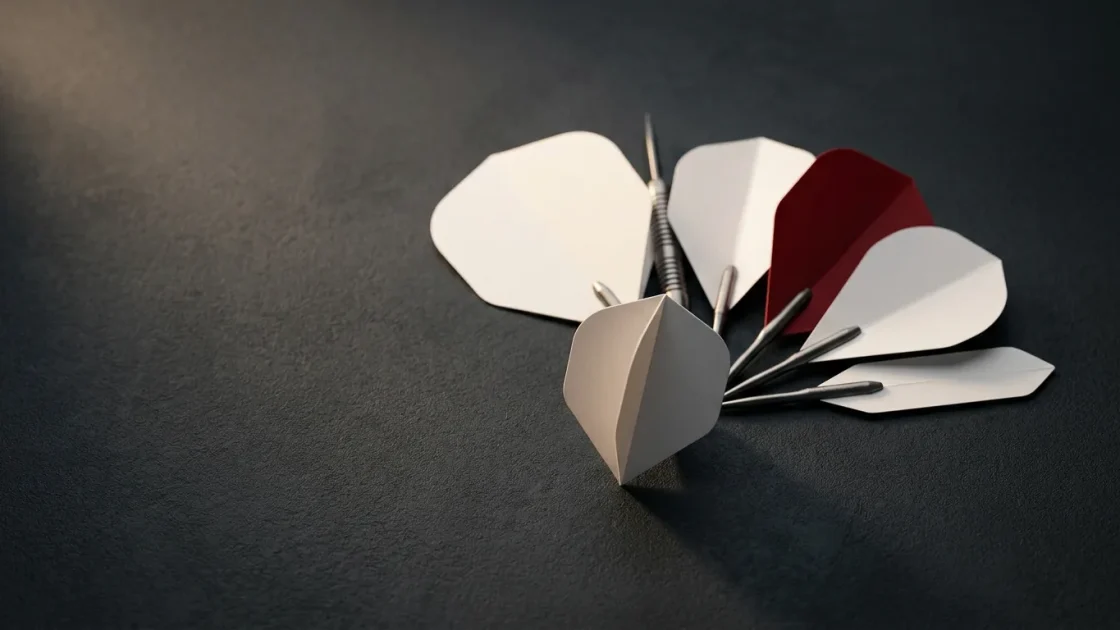
The four common shapes sit on a clear spectrum. Standard flights run roughly 38 to 44 square centimetres of surface, the largest of the group. Kite shapes drop to around 32 to 38. Pear covers about 26 to 32, and slim trims the edges off a standard for the least drag of all.

| Shape | Surface area | What it does | Best for |
|---|---|---|---|
| Standard | 38-44 cm² | Most drag, most correction, steeper landing angle | Developing throws, softer arcs |
| Kite | 32-38 cm² | Middle ground between standard and slim | Players who find standard bulky |
| Pear | 26-32 cm² | Low drag, quick through the air | Fast throws, lighter darts |
| Slim | Smallest | Least drag, flattest path, zero forgiveness | Clean, direct releases |
The landing angle matters too. A high-drag shape decelerates the dart into a steeper arc, so it arrives nose-first and sticks even if it wobbled slightly on the way. A slim flight keeps the dart flat, and a flat dart that’s still wobbling at the board is the one that bounces out.
KEY CONCEPT
Correction isn’t free. The drag that fixes a scruffy release also slows the dart and forces a bigger arc, which some players read as a mushy, floaty feel. The better your release gets, the less correction you need and the more that drag costs you.
Do thickness and material change accuracy?
Less than shape does, but yes, through one mechanism: a flight only stabilises the dart properly when its four wings sit at 90 degrees to each other. Thickness decides how long a flight holds that angle.
Flights are measured in microns. The common options are 75, 100, and 150. A 75-micron poly flight costs under £2 ($2.50) a set and bends out of the way of incoming darts, but it can crumple within a single session. Once the wings fold past 90 degrees, the drag pattern changes and your dart stops flying the way it did an hour ago. That’s a hidden accuracy leak most players never notice.
The 100-micron flight is the industry standard for a reason. It holds its shape three to five times longer than a 75, keeps enough stiffness for a steady drag profile, and stays flexible enough that incoming darts usually slide past. At 150 microns, flights like the Target Pro 150 last for months, but the stiff wings start deflecting your next dart instead of letting it through. In a tight treble bed that’s a real cost.
Thickness is also part preference. Keith Deller, the 1983 world champion, throws 75-micron flights, the thinnest sold. If a legend can win with paper-thin flights, the micron number clearly isn’t destiny. But for a repeatable setup, 100 micron is the default that needs a reason to leave.
Best flights for a developing throw
If your darts sometimes fishtail, if your grouping opens up late in a session, or if you’re still tweaking grip and stance, buy correction. That means a standard shape in 100 micron.
The Target Pro Ultra No.6 is the benchmark. It’s a standard profile with a 33mm wingspan and 40mm wing height, cut from 100-micron material with a spot UV print that protects the design and grips the shaft. Sets start around $1.59 (~£1.25). The Winmau Prism Alpha is the other safe pick: 100 microns of extra-thick poly-metronic material in a standard shape, about $1.95 to $3.00 (~£1.60 to £2.40) a set depending on the retailer.
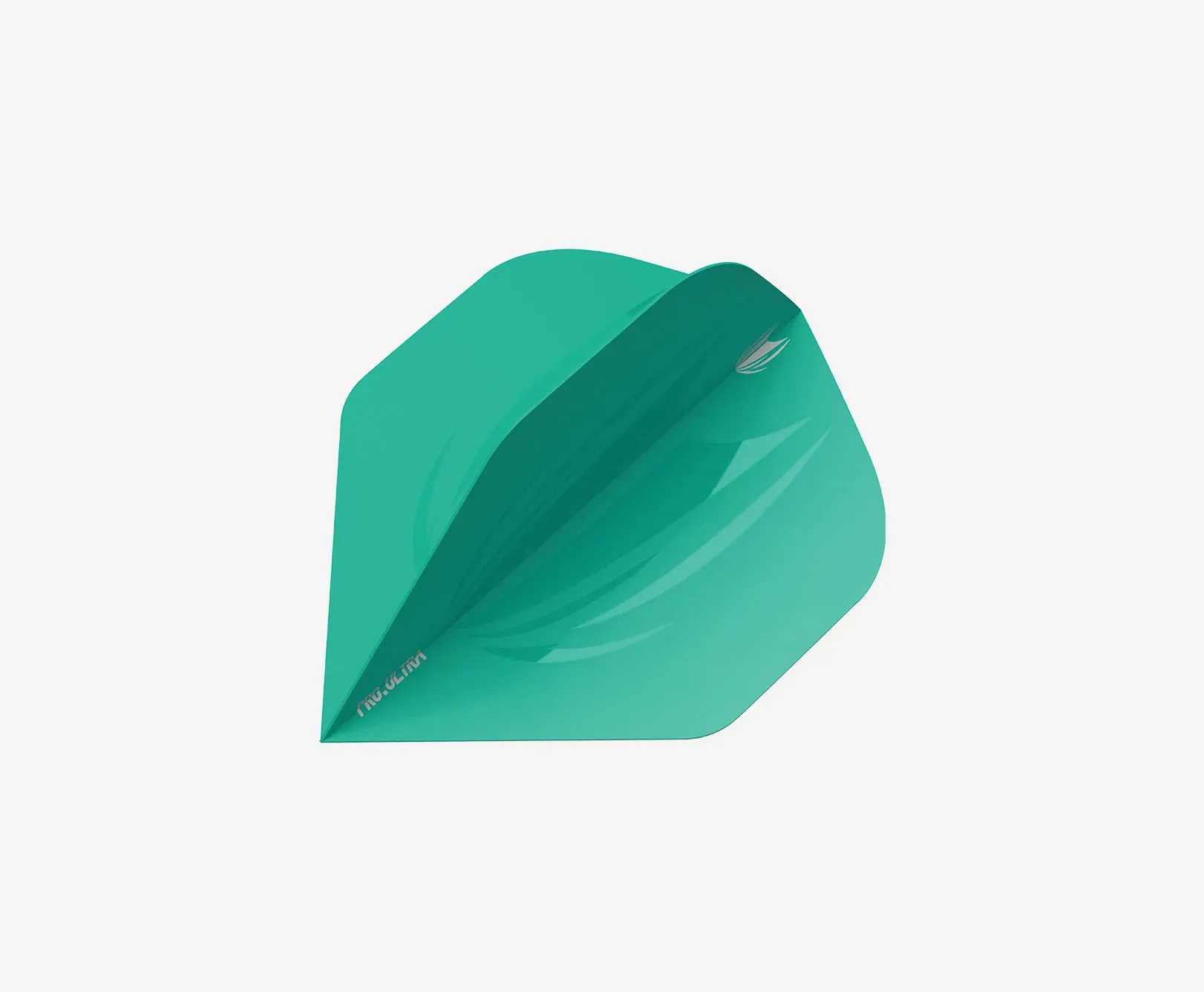
Target Pro Ultra No.6 Flights
Standard shape, 100 micron, spot UV print for shaft grip. The benchmark correction flight.
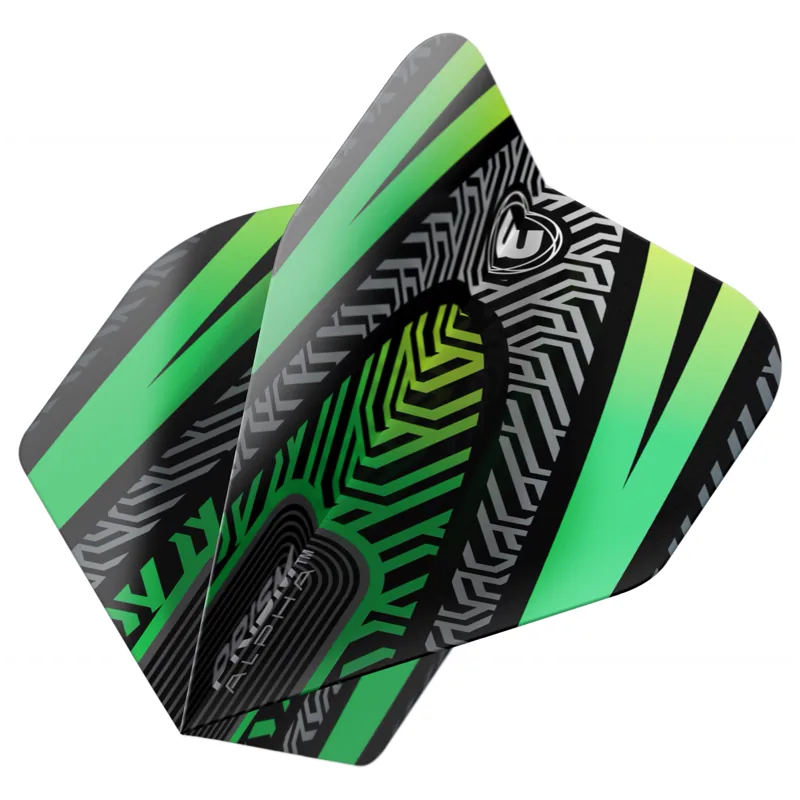
Winmau Prism Alpha Flights
Extra-thick 100 micron poly-metronic material in a standard shape. Cheap enough to always have spares.
If you want the absolute maximum surface, step up to a No.2. It’s the largest common flight, and it holds a steady, predictable path that suits smoother, more relaxed throwing styles. Dimitri Van den Bergh and Raymond van Barneveld both throw No.2 flights on the PDC stage, so there’s nothing beginner-ish about the shape.
PRACTICAL TIP
Flights are the cheapest experiment in darts. Two or three sets in different shapes cost less than a pint round. Buy a standard, a kite, and a slim, throw 100 darts with each, and let your grouping pick the winner.
Best flights for a consistent release
Once your release repeats cleanly, big flights stop helping and start costing. The drag you no longer need is still slowing the dart and steepening the arc. This is where slim and pear shapes earn their place.
A slim flight is a standard with the outer edges trimmed away. It keeps the length for stability but sheds the width, so the dart flies flatter and quicker with less fishtail. Pear shapes do a similar job with a rounder profile and suit lighter darts and faster arms. Phil Taylor famously threw tiny Vapor flights for years, and Jonny Clayton has stuck with kite shapes for a long time. Small flights at the top level are a statement that the release doesn’t need babysitting.
The honest test: throw 50 darts at treble 20 with your standards, then 50 with slims. If the slim grouping is as tight or tighter, your release has outgrown the correction and the flatter path is free accuracy. If the slim group scatters, you’re not done with standards yet. No shame either way. TheDartScout’s advice across every gear guide is the same: buy for the throw you have.
Are molded flights more accurate?
Molded flights remove a variable from the setup rather than changing the physics. A folded flight drifts out of its 90-degree set as it takes hits. A molded flight is manufactured at 90 degrees and stays there, so the drag profile on dart one and dart five hundred is identical.
The reference product is the L-style L1 PRO. It’s a Japanese-made molded standard with 1092 mm² of surface, reinforced edges to resist tearing, and a slot for L-style’s champagne ring, which locks the flight to the shaft and kills the hard deflections that cause robin hoods. Sets run about $6 to $8 (~£5 to £6). The lineup covers nine shapes, from the L1 standard down to the L6 slim, so you can keep your preferred profile and just upgrade the construction. Pros like Alan Soutar and Bradley Brooks throw molded flights in the classic standard and shape sizes.
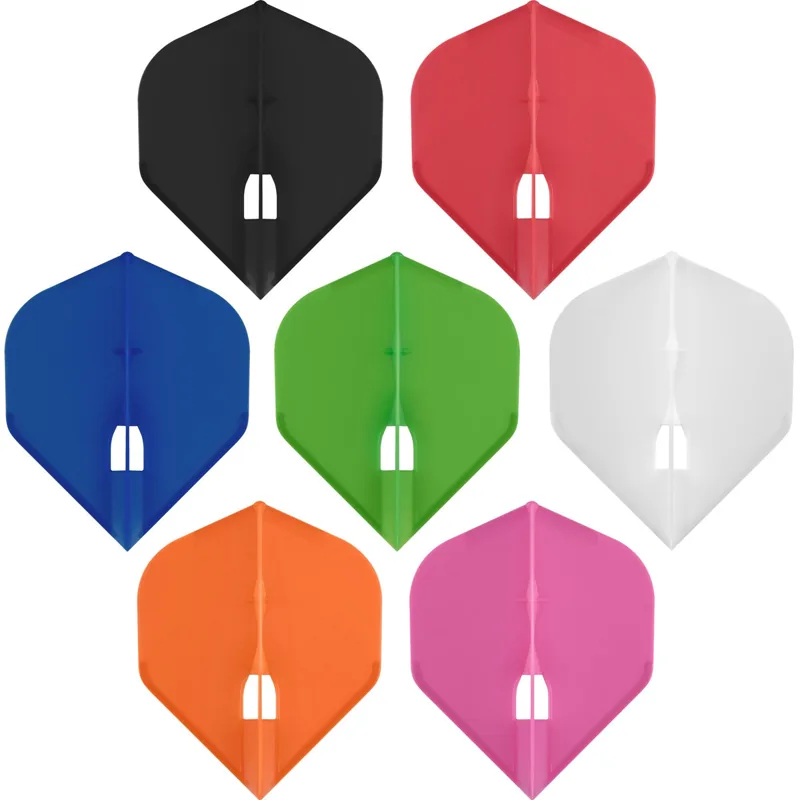
L-style L1 PRO Champagne Flight
Japanese-made molded standard. Permanent 90-degree wings, reinforced edges, champagne ring slot.
The Condor Axe goes one step further and molds the flight and shaft as a single piece of resin. Nothing works loose mid-leg, and the one-piece body flexes away from incoming darts and springs back to centre. Shaft lengths run from 21.5mm to 37.5mm. The catch is price: $19.55 to $27.50 (~£16 to £22) a set. Jose De Sousa, the 2020 Grand Slam champion, throws signature Condor flights.
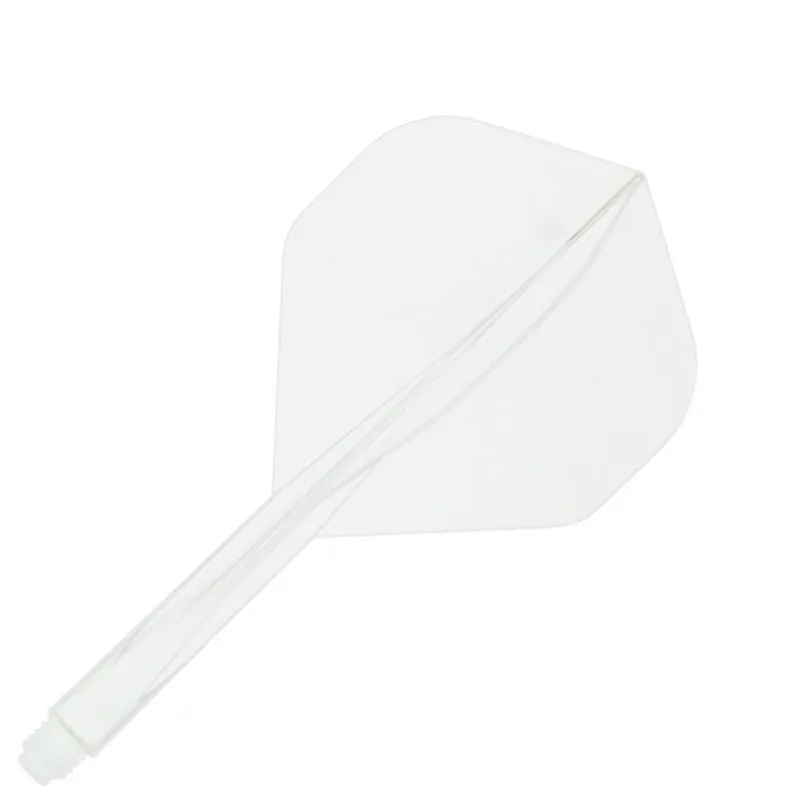
Condor Axe Flight & Shaft System
Integrated resin flight and shaft. Nothing works loose, flexes away from incoming darts.
SCOUT TAKE
Molded flights are the best accuracy-per-pound upgrade for players who already group tightly. The tighter you group, the more your flights get battered, and battered folded flights quietly change shape. If you’re not grouping yet, spend the money on practice time instead.
How flights and shafts work together
A flight never works alone. The shaft sets how far back the flight sits, and that lever arm changes how much stabilising force the same flight produces.
The pairing rule is simple. Longer shafts already add stability, so they pair better with smaller flights. Shorter shafts reduce the stabilising effect, so they want larger flights to compensate. If you switch from standard to slim, consider a medium or long shaft in the same session. Change one variable at a time and give each combination a fair count of throws before judging it.
Our guide on how flights and shafts affect your throw covers the full interaction, and the dart shafts guide breaks down lengths and materials on their own.
38-44 cm²
surface area of a standard flight, the most correction available
100µm
industry-standard thickness, holds shape 3-5x longer than 75µm
90°
the wing angle a flight must hold to stabilise the dart
Frequently asked questions
Which dart flight shape is most accurate?
There’s no single most accurate shape, only the right shape for your release. Standard flights (38-44 cm²) correct release errors and suit developing throws. Slim flights fly flatter and quicker but demand a clean release. If you’re unsure, start standard and only slim down when your grouping proves you can.
Do bigger flights improve accuracy?
They do for players whose release still wobbles. The extra surface area adds drag, which straightens the dart mid-air and lands it at a steeper, more secure angle. For a player with a clean release, that same drag just slows the dart and adds arc without giving anything back.
Are molded flights better than folded flights?
They’re more repeatable, which for accuracy amounts to the same thing. A molded flight like the L-style L1 PRO holds a permanent 90-degree wing angle, so its drag never drifts as it takes hits. Folded flights lose their set over time and change how the dart flies without you noticing. The trade is price: $6-8 a set against under $2.
What flight thickness should I use?
Start at 100 microns. It’s the industry standard: stiff enough for a steady drag profile, flexible enough that incoming darts slide past rather than deflecting, and it holds shape three to five times longer than 75-micron flights. Go thinner only for feel, and thicker (150) only if you shred flights faster than you can replace them.
Do professional players use standard flights?
Most do. The No.2 and No.6 standard shapes are the most used flights in professional darts. Dimitri Van den Bergh and Raymond van Barneveld throw No.2, Rob Cross throws No.6. The exceptions are famous ones: Phil Taylor’s tiny Vapor flights and Jonny Clayton’s kites show small shapes work when the release is world class.
Why do my darts fishtail through the air?
Fishtailing usually means the flight isn’t generating enough correction for your release, or the flight has lost its 90-degree wing set. Try a fresh set first, since a crumpled flight flies nothing like a new one. If new flights still fishtail, step up a size in shape or check that your shaft length matches: short shafts want bigger flights.
Picking the best dart flights for accuracy is a matching exercise, and the match is to your release. A developing throw earns more from a $2 set of standard No.6s than from any premium upgrade, and a grooved release gains a flatter, quicker dart from slims or molded flights. Start with the shape that fits your release today, hold the thickness at 100 micron, and re-test once a season as your throw improves. For the wider market picture, our best dart flights roundup covers every category, and the how to choose dart flights guide walks through the full decision from scratch.